
 Save Pin
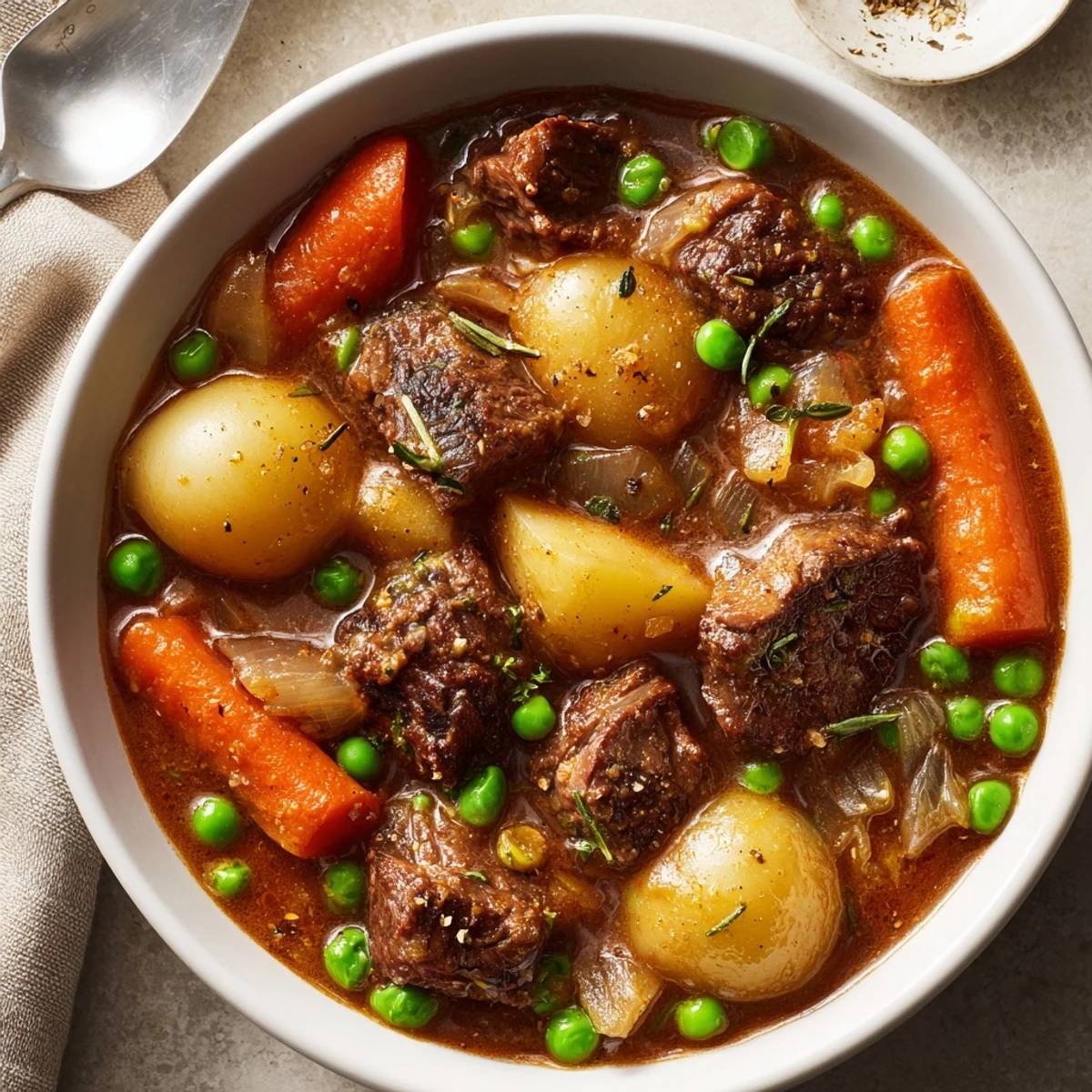
 Brown beef cubes, then saute onion and garlic. Stir in flour and tomato paste, deglaze with red wine, add stock, root vegetables, bay leaves and thyme. Simmer low and slow until meat is meltingly tender and broth thickens. Finish with peas, adjust seasoning and serve hot with crusty bread or buttered noodles; flavors deepen if made ahead.
The rain was hammering against the kitchen window so hard that Tuesday evening that I abandoned all plans for a quick weeknight stir fry and instead found myself standing at the butcher counter, eyeing a thick slab of chuck roast like it held the answer to everything. Some dishes you plan for, and others simply demand to be made, arriving in your brain fully formed the moment the temperature drops below fifty degrees. This beef stew is firmly in the second category, the kind of meal that transforms a cold, ordinary night into something that feels almost ceremonial. It asks for patience, but it pays you back in spoonfuls.
My neighbor Dave wandered over one Sunday while I had a pot of this simmering on the back burner and ended up staying for three bowls and an entire conversation about his childhood in Vermont, all because the smell drifting through the open screen door had stopped him mid stride on the sidewalk. I have since learned that beef stew is less a recipe in my house and more an open invitation I never have to formally extend.
Ingredients
- 2 lbs beef chuck, cut into 1.5 inch cubes: Chuck is the undisputed king of stew meat because its marbling melts slowly into the broth, creating tenderness you simply cannot get from leaner cuts.
- 4 medium carrots, peeled and sliced: They add a gentle sweetness that balances the savory depth of the broth beautifully.
- 3 large potatoes, peeled and diced: Russet or Yukon Gold both work, though Yukons hold their shape a bit better during the long simmer.
- 2 stalks celery, sliced: An understated team player that quietly builds the aromatic foundation of the entire pot.
- 1 large onion, chopped: Cooked down, it practically dissolves into the broth and gives it body without any thickener at all.
- 3 cloves garlic, minced: Fresh is nonnegotiable here, and three is really a starting point I often double it.
- 1 cup frozen peas (optional): Stirred in at the very end, they bring a pop of color and freshness that the stew desperately needs after hours of slow cooking.
- 3 cups beef stock: A good quality stock makes all the difference, so taste it before you pour it in.
- 1 cup dry red wine: This is where a lot of the complexity comes from, and a Cabernet or Merlot works wonderfully.
- 2 tbsp tomato paste: A small amount adds remarkable umami depth without making the stew taste like tomato sauce.
- 2 tbsp vegetable oil: Used for browning the beef, and you want an oil that can handle high heat without smoking.
- Salt and black pepper: Seasoning throughout the process, not just at the end, is what builds layers of flavor.
- 2 bay leaves: Remember to remove them before serving because biting into a bay leaf is a deeply unpleasant surprise.
- 1 tsp dried thyme: Its earthy, slightly floral character is the quiet herb backbone of the whole dish.
- 1/2 tsp paprika: Just a hint of warmth and color that most people cannot quite identify but definitely notice when it is missing.
- 2 tbsp all purpose flour (or cornstarch): This is your thickener, and cornstarch works perfectly if you need to keep it gluten free.
Instructions
- Brown the beef in batches:
- Heat the oil in a large Dutch oven over medium high heat, season the beef cubes generously with salt and pepper, then sear them in small batches until every side carries a deep mahogany crust. Resist the urge to crowd the pot because steaming is the enemy of browning and browning is where all the flavor begins.
- Build the aromatic base:
- Turn the heat down to medium and add the onion and garlic to the same pot, scraping up every last bit of those caramelized bits stuck to the bottom because that concentrated flavor is pure gold. Stir in the flour and tomato paste, letting them cook together for about a minute until the mixture darkens slightly and smells toasty.
- Deglaze with wine:
- Pour in the red wine gradually, using your wooden spoon to release every speck of fond from the bottom of the pot as the liquid bubbles and transforms into something fragrant and complex. Let it simmer for a minute or two until the sharp alcohol smell cooks off and what remains is rich and slightly syrupy.
- Combine everything and simmer:
- Return the browned beef and all its resting juices to the pot, then add the carrots, celery, potatoes, beef stock, bay leaves, thyme, and paprika, stirring until everything is happily submerged together. Bring it to a boil, then immediately drop the heat to low, cover the pot, and let it barely bubble away for two hours, stirring once in a while to make sure nothing sticks.
- Finish with peas and adjust:
- Remove the lid, stir in the frozen peas, and let the stew simmer uncovered for another fifteen minutes until the liquid has reduced and thickened to a consistency that coats the back of a spoon. Pluck out the bay leaves, taste for salt and pepper, and add more if your palate tells you it needs it, because stew is remarkably forgiving about late seasoning adjustments.
 Save Pin
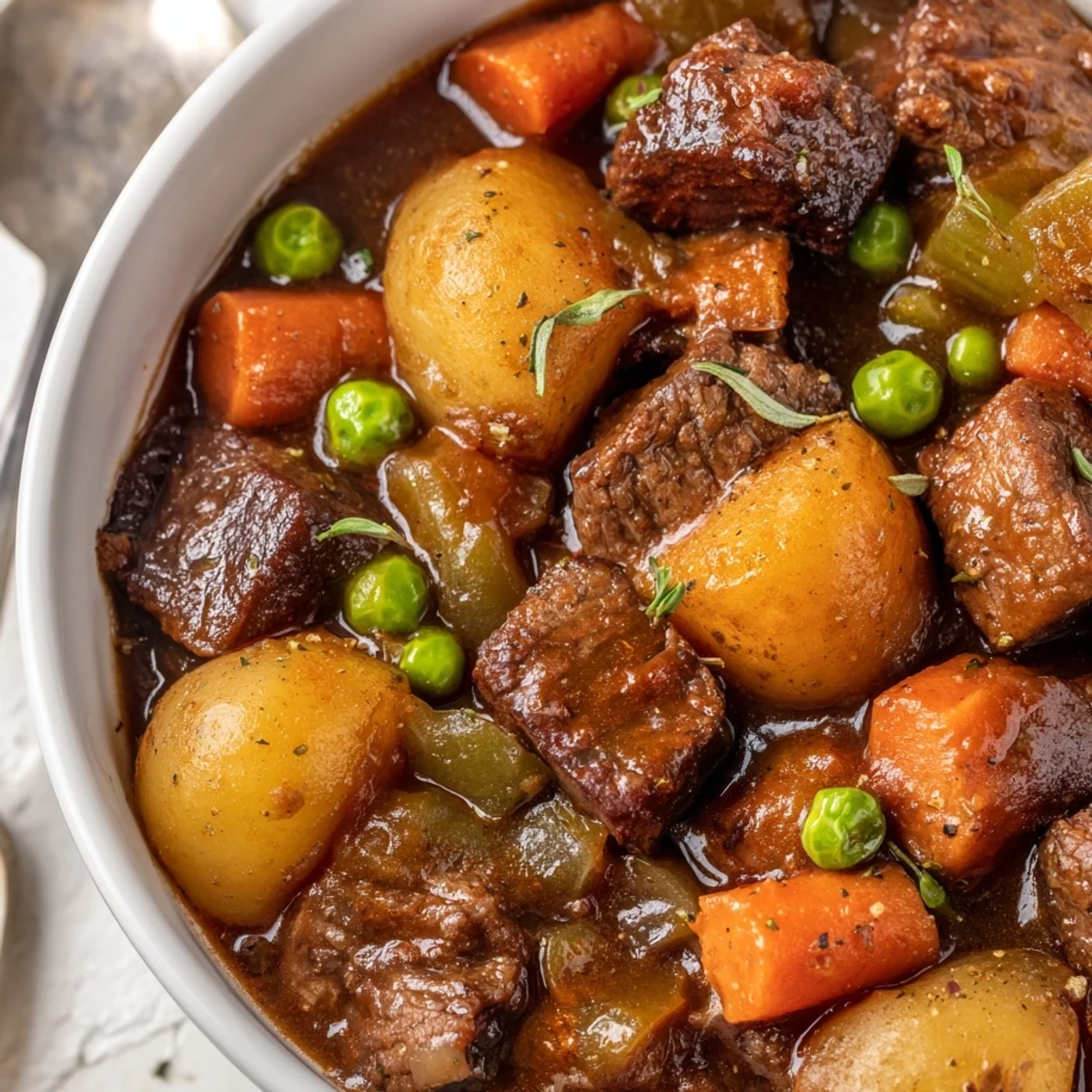
 There is something almost magical about lifting the lid of a pot that has been quietly working away on your stove for two hours and being hit with a wall of steam that smells like every comfort you have ever known.
Serving Ideas That Actually Work
A thick slice of crusty sourdough torn by hand and used to mop up the broth is, in my humble opinion, the only correct accompaniment, though buttered egg noodles have their devoted supporters and I would never argue with anyone who goes that route.
Making It Your Own
A splash of Worcestershire sauce stirred in at the end adds a tangy depth that most people assume came from hours of complicated technique, and a few drops of balsamic vinegar can do something similar if you happen to be out of Worcestershire.
Storage and Reheating
This stew keeps beautifully in the refrigerator for up to four days and the flavor genuinely deepens overnight as the ingredients continue to meld together in the cold. For longer storage, it freezes well for up to three months, though the potatoes may soften slightly upon reheating.
- Let the stew cool completely before transferring to storage containers to prevent condensation from watering it down.
- Reheat gently on the stovetop over low heat rather than using a microwave for the most even warming.
- Always taste and reseason after reheating because cold storage can dull the salt and herbs.
 Save Pin
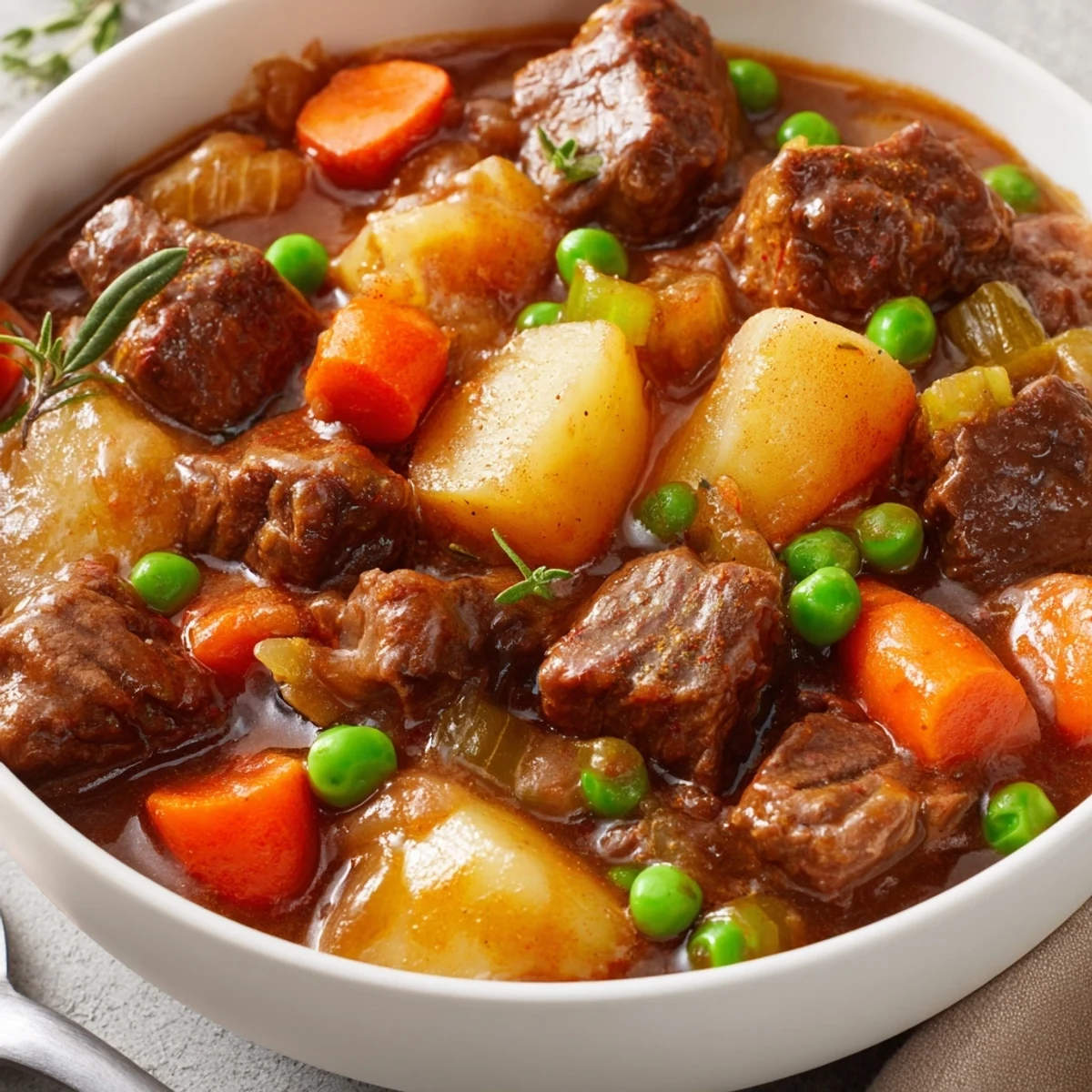
 Some recipes are just dinner, but a good beef stew, ladled into a wide bowl on a night when the wind will not stop blowing, is a reminder that the simplest things in the kitchen are often the most generous. Make it once and it will become part of your cold weather rotation without any effort at all.
Recipe FAQs
- → How long should I simmer the beef?
-
Simmer low and slow for about 2 hours until meat is meltingly tender; check every 30 minutes and stir to prevent sticking.
- → How do I thicken the broth?
-
Whisk in a little flour or a cornstarch slurry after sautéing, or mash some cooked potatoes into the broth. Cooking uncovered reduces and concentrates the sauce.
- → Can I substitute the red wine?
-
Yes. Replace wine with equal parts beef stock and a splash of balsamic or red wine vinegar for acidity if you prefer an alcohol-free version.
- → What cut of beef works best?
-
Chuck is ideal for long braises: it becomes tender and develops deep flavor. Brisket or short ribs also yield rich, unctuous results.
- → How can I make this gluten-free?
-
Use cornstarch or a certified gluten-free flour as the thickener and verify that stock and other packaged ingredients are labeled gluten-free.
- → Can this be made ahead and reheated?
-
Yes. Flavors often improve after resting overnight. Reheat gently over low heat, adding a splash of stock if the sauce tightens, and adjust seasoning before serving.