
 Save Pin
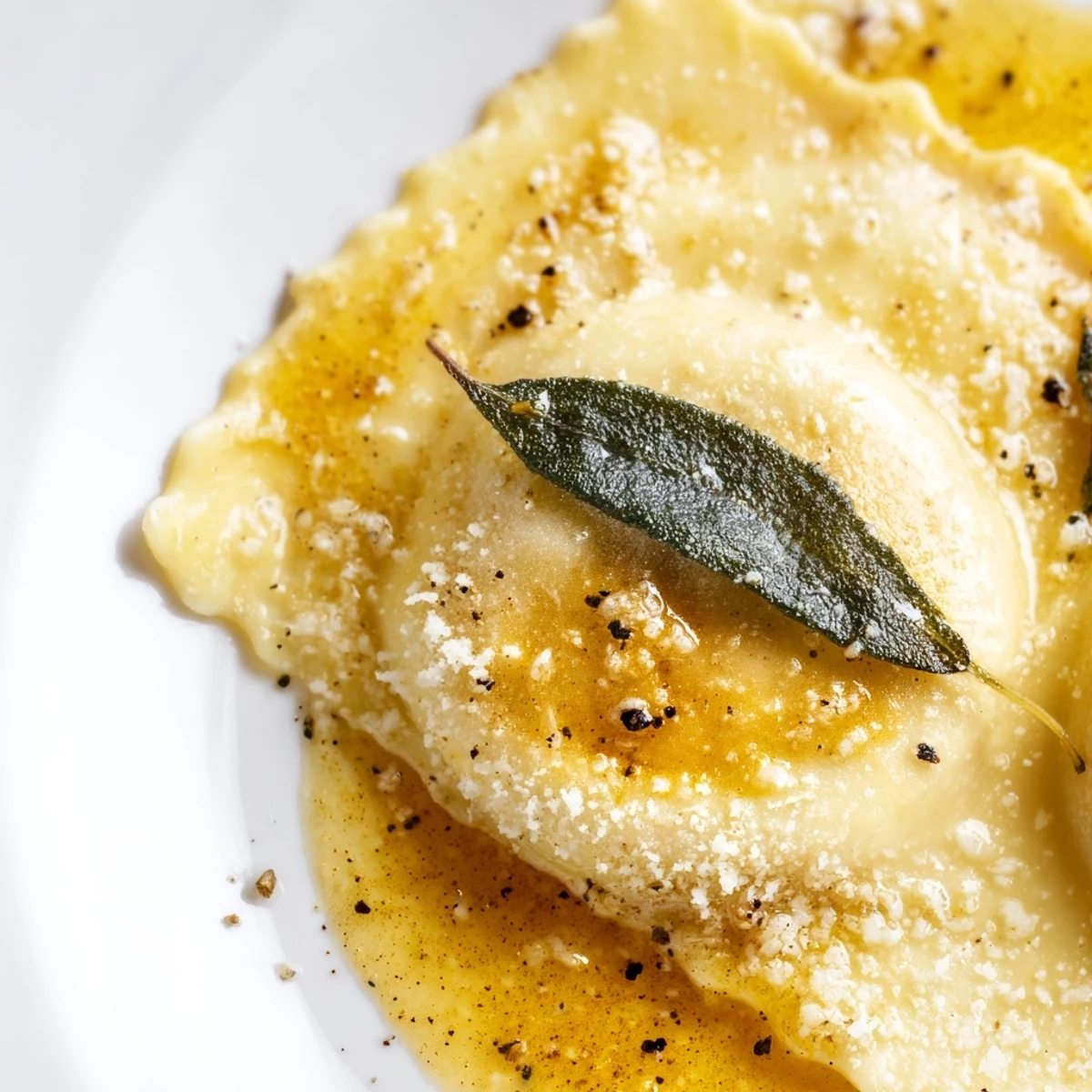
 This dish features tender, dumpling-style pasta filled with a creamy mixture of roasted butternut squash, ricotta cheese, and Parmesan. The pasta dough is carefully rolled thin and sealed to create individual pillows that cook quickly in simmering water. Once cooked, the ravioli are gently tossed in a nutty and aromatic sage brown butter sauce, which adds a rich depth of flavor. The combination of sweet squash, creamy filling, and herbaceous butter makes for a comforting and elegant Italian-inspired main course suitable for vegetarians. Serve warm with extra Parmesan and freshly ground pepper for a satisfying finish.
The first time I made butternut squash ravioli, I was trying to impress someone who'd just returned from Italy with stories about tiny pillows of pasta filled with autumn itself. I remember standing at my kitchen counter, flour dusting my forearms, watching the butter turn golden in the pan while sage leaves crackled like autumn leaves hitting pavement. That dish became the reason they came back to my kitchen again and again.
I still think about the afternoon I made this for a small dinner party when everyone was stressed about something different. Watching my friends go quiet for that first bite, then immediately asking for the recipe, reminded me that sometimes the most generous thing you can do is spend time in the kitchen making something real.
Ingredients
- All-purpose flour (2 cups): The foundation of tender pasta dough, and you want the type without any added salt or special treatment, just pure neutral flour that will absorb the eggs evenly.
- Eggs (3 large): These are what bind your dough together and give it structure, so room temperature ones work best and will incorporate more smoothly than cold ones straight from the fridge.
- Butternut squash (1 medium): Choose one that feels heavy for its size and has deep golden color, which signals better sweetness and less watery flesh when roasted.
- Ricotta cheese (1/2 cup): The creamy base of your filling that keeps ravioli pillowy, and whole milk ricotta will taste richer than low-fat versions.
- Parmesan cheese (1/4 cup grated): Buy it as a wedge and grate it yourself, because pre-grated versions have anti-caking agents that prevent the filling from binding properly.
- Ground nutmeg (1/4 tsp): Just a whisper of this spice is enough to unlock the squash flavor and make people say 'what is that?' without being able to name it.
- Unsalted butter (1/2 cup): The star of your sauce, and unsalted lets you control the salt level while the butter itself browns into something nutty and deep.
- Fresh sage leaves (12): Hunt for tender sage that smells sharp and clean, because dried sage will taste like dust compared to fresh leaves that crisp up in hot butter.
Instructions
- Roast the squash until it caramelizes:
- Cut your butternut squash into bite-sized cubes, toss with olive oil and seasoning, then spread it on a baking sheet in a single layer so it browns evenly instead of steaming. After 25 to 30 minutes at 400°F, the edges will turn golden and the insides will be so soft they collapse when you touch them.
- Make the pasta dough while squash roasts:
- Pile your flour into a mound on a clean counter, press a well in the center with your fingers, then crack eggs into that crater and add salt. Using a fork, gently beat the eggs like you're making scrambled eggs, and gradually incorporate flour from the walls of the well, working in a circular motion so you don't break through and let everything spill out.
- Knead the dough until it's silky:
- Once you've brought the shaggy mess together, push it with the heel of your hand for 8 to 10 minutes until it becomes smooth, elastic, and stops sticking to the counter. This is the moment when you feel the dough transform from rough to refined, and you'll know it's ready when you press your finger into it and the indent slowly bounces back.
- Mix the filling with roasted squash and cheese:
- Mash your cooled roasted squash until it's mostly smooth but still has a little texture, then fold in ricotta, Parmesan, nutmeg, salt, and pepper until everything is creamy and cohesive. Taste a tiny spoonful and adjust seasoning, remembering that Parmesan adds its own saltiness so you don't need as much as you think.
- Roll and cut your ravioli:
- Divide dough into quarters and work with one piece at a time, keeping the rest covered so it doesn't dry out. Roll your piece paper-thin on a floured surface, then place small teaspoons of filling in neat rows about 1.5 inches apart, brush water around each mound, lay another sheet of dough on top, press to seal, and cut into squares or circles.
- Brown the butter and sage while ravioli cook:
- Melt butter in a skillet over medium heat and watch it transform from pale yellow to golden to amber over 3 to 4 minutes, adding sage leaves so they crisp and release their oils into the butter. The smell will be intoxicating, and you'll know it's done when the butter smells toasty and nutty, not burnt.
- Cook ravioli in simmering water:
- Drop ravioli carefully into a pot of gently boiling salted water and they'll sink at first, then float to the surface after 2 to 3 minutes, which is your signal that they're done. Use a slotted spoon to lift them directly from the water into your sage butter, tossing gently so the butter coats every pillow.
 Save Pin
 There's something almost meditative about the moment your ravioli float to the surface, when you've gone from raw ingredients to something that looks and tastes like you've been making pasta your whole life. That's when you know you're going to make this again, because your hands remember the motions and your kitchen smells like autumn and butter and possibility.
Choosing and Preparing Your Squash
Butternut squash can be intimidating to cut, so I learned to microwave mine for 2 to 3 minutes first, which softens the skin just enough that your knife slides through without requiring the strength of someone who lifts weights. The goal is cubes that are roughly uniform so they roast at the same rate and all caramelize together instead of some pieces drying out while others stay pale.
Building Flavor in Your Filling
The nutmeg in the filling does something almost magical, hitting notes that make people say the ravioli tastes like autumn and comfort without them being able to identify why. I discovered that grating fresh nutmeg tastes completely different from pre-ground, more floral and less dusty, so if you have a whole nutmeg and a microplane, that's the move that transforms good filling into the kind people dream about.
Making This Ahead and Freezing
You can assemble ravioli in the morning and freeze them on a baking sheet, then bag them for a dinner that comes together in 15 minutes on a night when you're too tired to cook. Frozen ravioli actually cook better than fresh ones because the filling stays colder longer while the pasta cooks through, giving you a perfect balance of tender pasta and hot filling.
- Dust frozen ravioli with extra flour before bagging so they don't stick together into one impossible clump.
- Cook frozen ravioli directly from the freezer without thawing, adding just 1 to 2 minutes to the cooking time.
- Make a double batch while you're at it, because the effort is the same and future you will be grateful.
 Save Pin
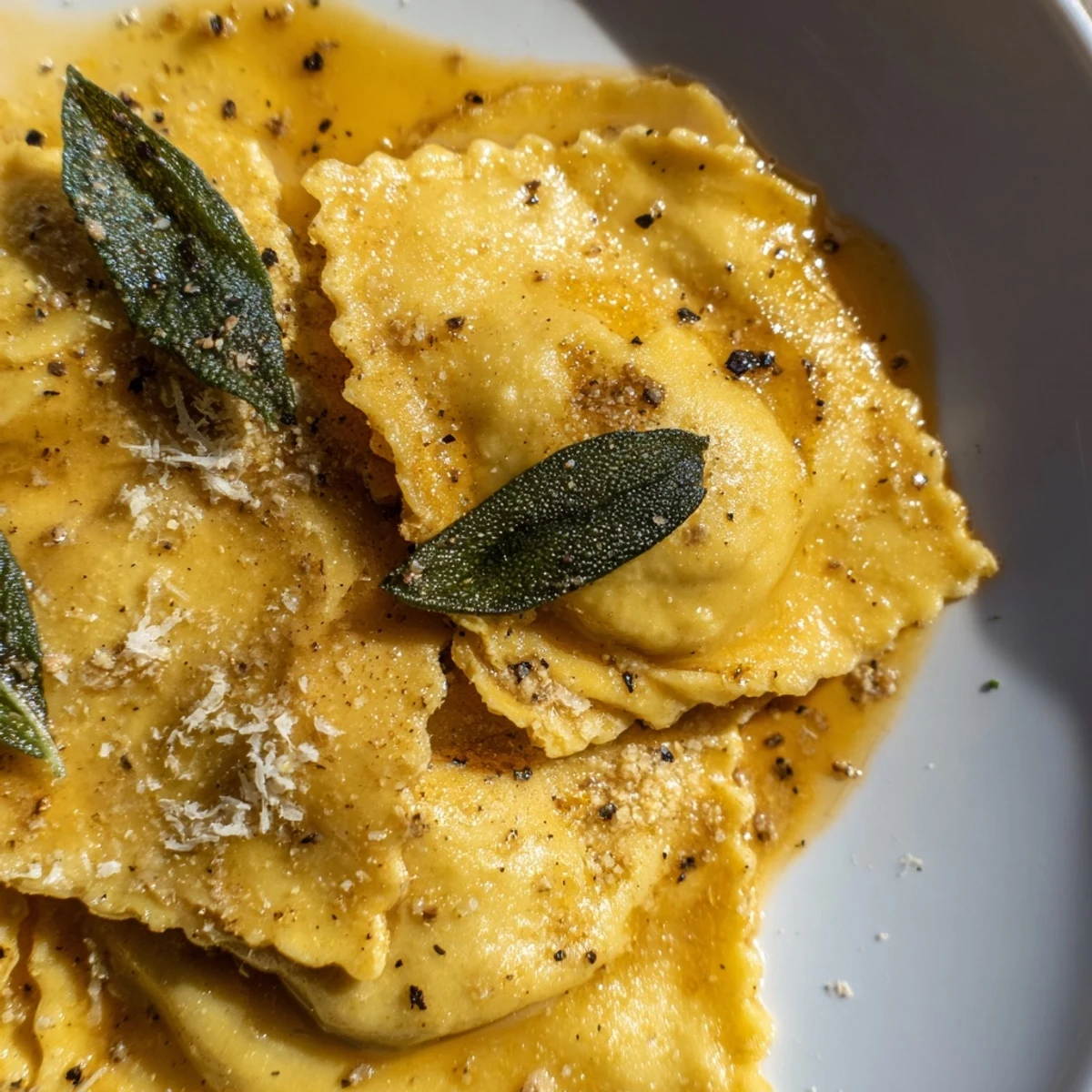
 Making ravioli by hand feels like you're learning an ancient skill, even though you're just folding dough and filling into little squares. Serve this warm with extra Parmesan and a grind of black pepper, and watch people close their eyes for that first bite.
Recipe FAQs
- → How do I prevent ravioli from sticking together while cooking?
-
Keep the ravioli separated on a floured surface before cooking and gently stir the water occasionally during boiling to prevent sticking.
- → Can I make the pasta dough ahead of time?
-
Yes, after kneading, wrap the dough in plastic and refrigerate for up to 24 hours before rolling out.
- → What is the best way to roast butternut squash for the filling?
-
Cut the squash into cubes, toss with olive oil, salt, and pepper, then roast at 400°F until tender and caramelized, about 25–30 minutes.
- → How do I achieve the brown butter sage sauce?
-
Melt butter over medium heat, add fresh sage leaves, and cook until the butter foams and turns golden brown, then remove from heat.
- → Can I substitute pumpkin for butternut squash?
-
Yes, pumpkin can be used as a flavorful alternative in the filling with similar texture and sweetness.