
 Save Pin
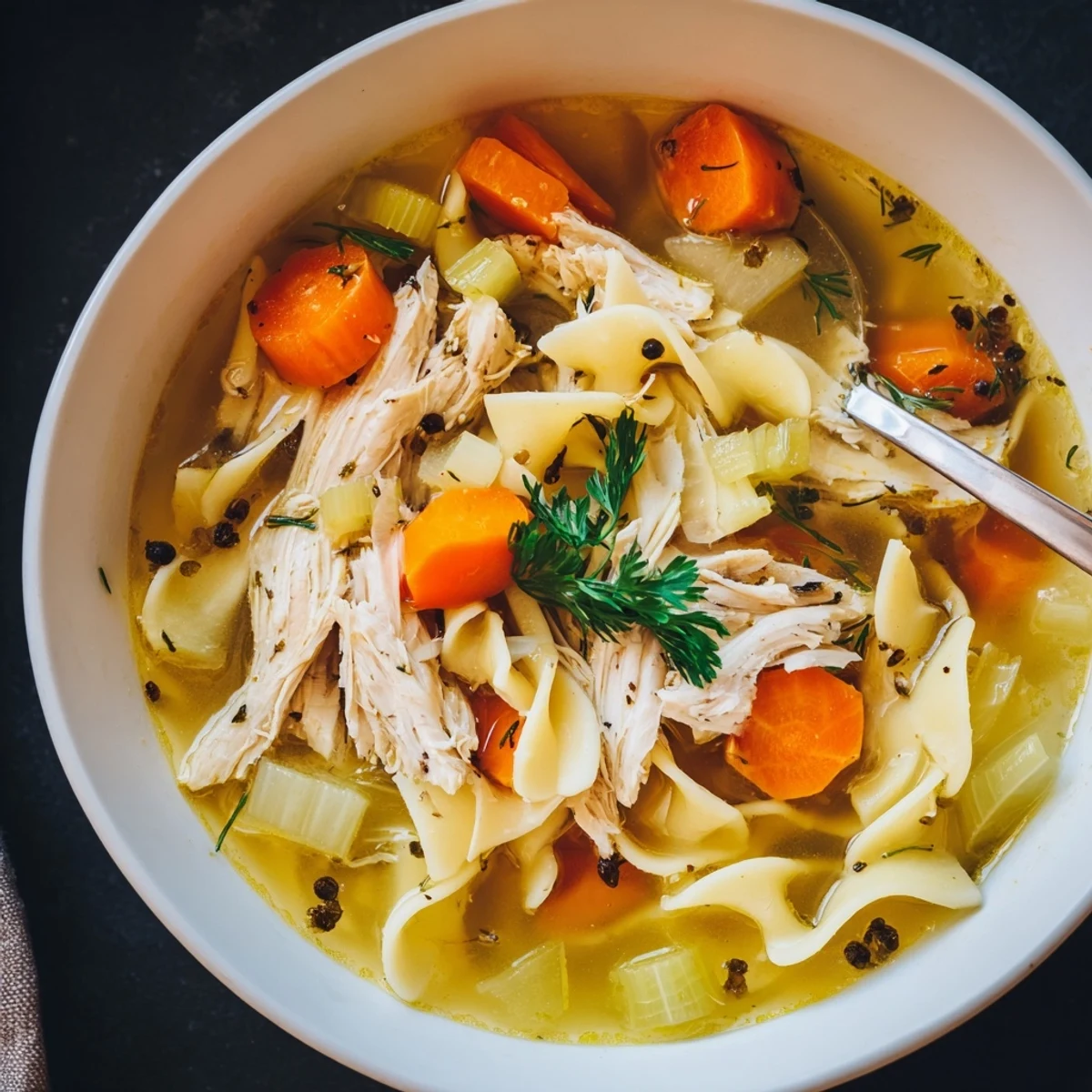
 Start by placing chicken in a large pot and covering with cold water or low-sodium broth. Bring to a gentle simmer, skim foam, then add carrots, celery, onion, garlic, parsnip, bay leaves, peppercorns and thyme. Cook 45–60 minutes until meat and veg are tender. Remove, shred meat, return to pot; add noodles or rice if using and simmer until tender. Finish with chopped parsley or dill, adjust seasoning, and serve hot. Makes four servings.
Steam fogged up the kitchen window while rain hammered the roof, and all I could think about was the half chicken sitting in my fridge waiting to become something that would warm me from the inside out. Chicken soup is never just a meal. It is a negotiation with the universe on a bad day, a truce between you and the cold. That afternoon I learned that patience with a simmering pot pays off more than any fancy technique ever could.
My neighbor knocked on the door halfway through the simmer, following the scent like a cartoon character floating toward a pie. I ladled her a bowl right from the pot, and she stood in my kitchen eating it without even sitting down. That is the power of this soup. It strips away pretense and just feeds you.
Ingredients
- 1 whole chicken cut into pieces or 800 g chicken thighs and breasts, bone in, skin on: The bones are everything here. They give the broth body and a silkiness you simply cannot fake with boneless meat.
- 3 medium carrots, sliced: Cut them on a slight angle for more surface area and a prettier bowl.
- 2 celery stalks, chopped: These form the aromatic backbone alongside the onion. Do not skip them.
- 1 large onion, diced: A rough chop is fine since it will melt into the broth over time.
- 3 garlic cloves, minced: Fresh garlic only. The jarred stuff tastes flat after an hour of simmering.
- 2 bay leaves: They add a subtle earthy depth that you notice most when they are missing.
- 1 parsnip, peeled and sliced (optional): I tried this on a whim once and now I never skip it. It adds a faint sweetness that rounds everything out.
- 2 liters cold water or low sodium chicken broth: Cold liquid starts the extraction slow and gives you a clearer, cleaner broth.
- 1 tsp whole black peppercorns: Whole peppercorns give gentle warmth without muddying the broth the way ground pepper can.
- 1 small bunch fresh parsley: Drop the whole bunch in stems and all. You will fish it out later.
- 1 tsp dried thyme or 3 sprigs fresh thyme: Thyme and chicken are old friends. Trust that partnership.
- 1 and 1/2 tsp salt plus more to taste: Start modest. You can always add more at the end but you cannot take it away.
- 150 g egg noodles or rice (optional): Noodles make it a meal. Rice makes it gentle. Either choice is correct.
- Fresh dill, chopped, for garnish (optional): A scattering of dill on top turns a simple bowl into something that smells like a holiday.
Instructions
- Start the broth:
- Place the chicken pieces in a large pot and pour in the cold water or broth. Bring it to a gentle simmer over medium heat, and use a spoon or skimmer to remove any foamy scum that floats up. This step keeps your broth clean and clear.
- Build the flavor base:
- Add the carrots, celery, onion, garlic, parsnip if you are using it, bay leaves, peppercorns, thyme, and salt. Let everything simmer uncovered for 45 to 60 minutes until the chicken is cooked through and the vegetables are tender enough to yield to a fork.
- Pull the chicken:
- Carefully remove the chicken pieces from the pot and set them aside to cool just enough to handle. Discard the skin and bones, then shred or chop the meat into bite sized pieces.
- Add noodles or rice if you like:
- Drop the noodles or rice into the simmering broth and cook for 8 to 10 minutes until tender. Return the shredded chicken to the pot and let it warm through.
- Season and finish:
- Taste the broth and add more salt or pepper if it needs it. Remove the bay leaves and any herb stems that are hanging around.
- Serve with care:
- Ladle the steaming soup into deep bowls and scatter fresh parsley and dill over the top. Serve it hot and watch people go quiet with their first spoonful.
 Save Pin
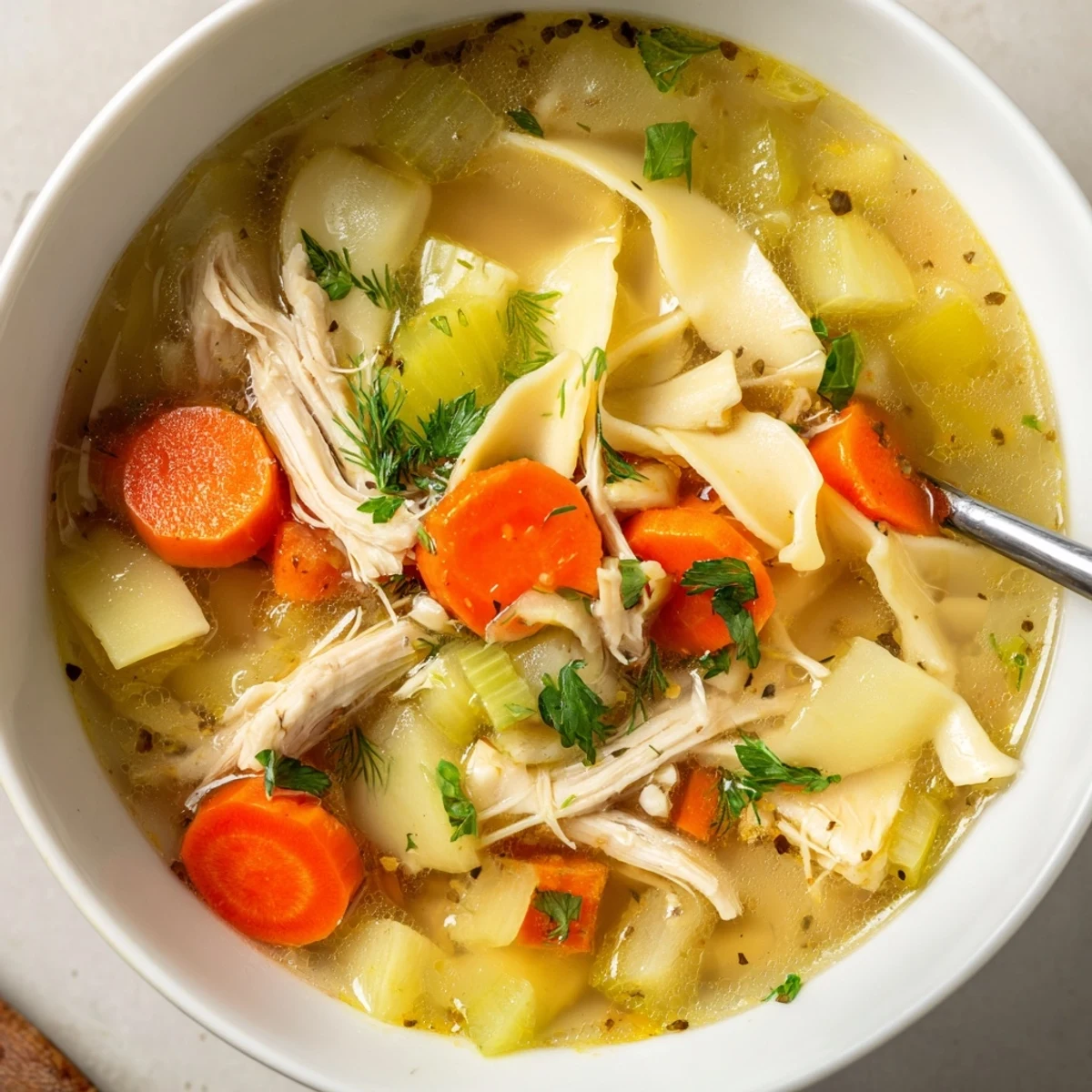
 On the second day the broth tastes even better because the ingredients have had all night to get acquainted in the fridge. I now make this soup specifically to have leftovers. It is a small act of kindness to your future self.
A Note on Broth Clarity
The trick I learned after years of cloudy results is to never let the pot reach a full rolling boil. A bare simmer, where you see just a few bubbles break the surface, is the sweet spot. Boiling emulsifies fat and particles into the liquid, making it murky. Simmering gently keeps everything transparent and refined.
Choosing the Right Pot
A tall heavy bottomed soup pot distributes heat evenly and gives the ingredients room to move without crowding. I once tried making this in a wide shallow Dutch oven and the liquid reduced too fast, leaving me with a concentrated salty broth. Go tall and go heavy.
Serving and Storing
This soup freezes beautifully for up to three months if you leave out the noodles. I keep quart containers in the freezer all winter long because knowing soup is waiting for you makes cold evenings feel manageable.
- Cool the soup completely before refrigerating or freezing to keep the texture intact.
- Store noodles separately if you plan to freeze so they do not turn mushy.
- A squeeze of lemon juice at the end wakes up every flavor in the bowl.
 Save Pin
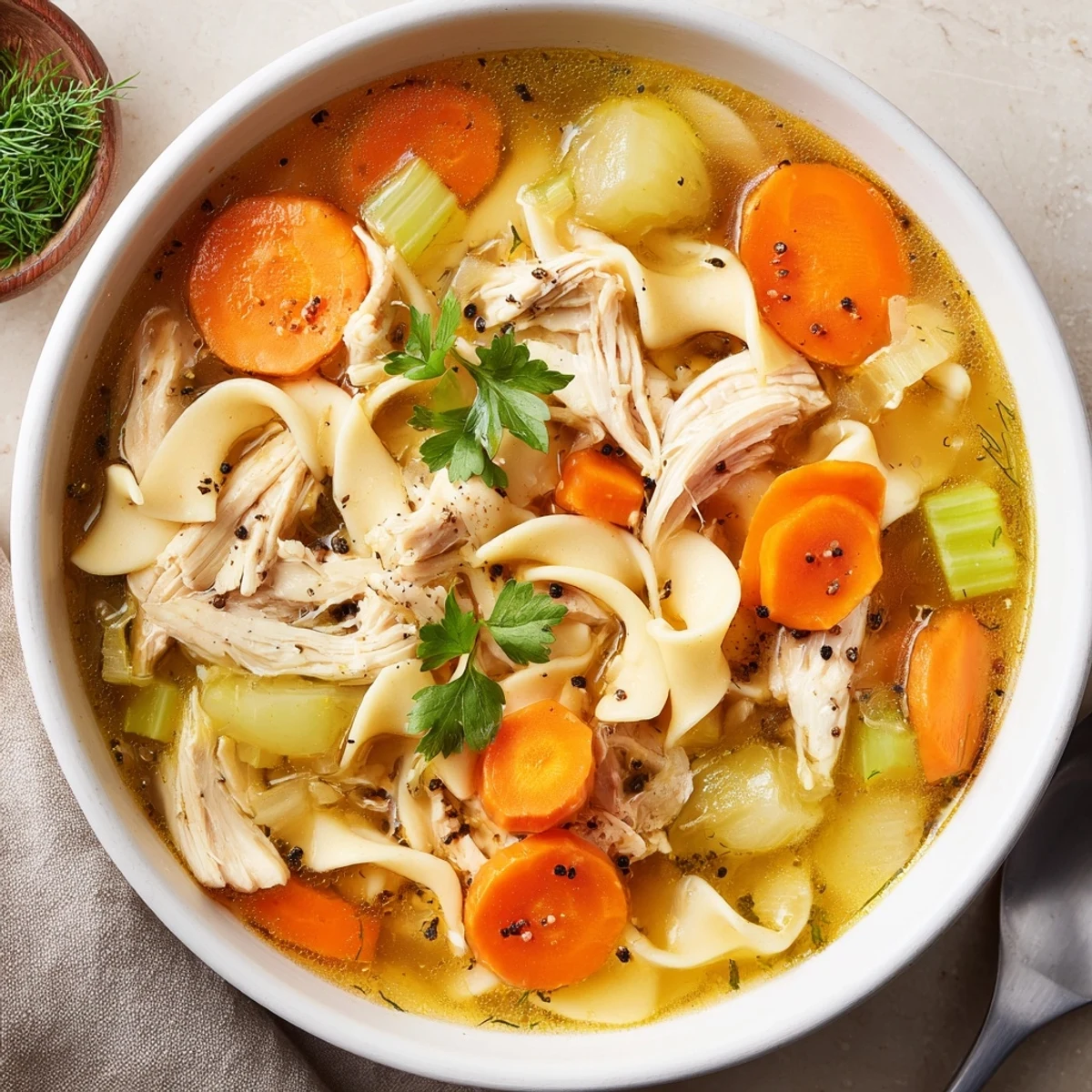
 Some recipes earn a permanent place in your kitchen not because they impress but because they comfort. This is that soup. Make it once and it will follow you for life.
Recipe FAQs
- → Can I use boneless chicken instead of a whole bird?
-
Yes. Boneless thighs or breasts work and reduce shredding effort, but bone-in pieces add more gelatin and depth to the broth. If using boneless cuts, shorten simmer time slightly and monitor tenderness.
- → How can I deepen the broth flavor?
-
Sauté the vegetables briefly in a little oil before adding liquid, roast the bones or bird first, and simmer gently for the full 45–60 minutes. Reducing the broth slightly concentrates flavor; finish seasoning at the end.
- → What’s the best way to store leftovers?
-
Cool quickly and refrigerate in airtight containers for 3–4 days. Freeze portions for up to three months. If you added noodles, store them separately to avoid soggy texture when reheating.
- → How do I make this suitable for gluten-free diets?
-
Use gluten-free noodles or rice and verify that any store-bought broth or seasoning is labeled gluten-free. Most other ingredients are naturally gluten-free.
- → Should I strain the broth for clarity?
-
Skimming foam during the first simmer helps clarity. For very clear broth, strain through a fine mesh, chill to remove fat, or use an egg-white raft technique to capture impurities before a final strain.
- → What are good garnishes and pairings?
-
Fresh parsley or dill brightens the bowl. Serve with crusty bread or a light white wine like Sauvignon Blanc. A squeeze of lemon can also lift the flavors just before serving.