
 Save Pin
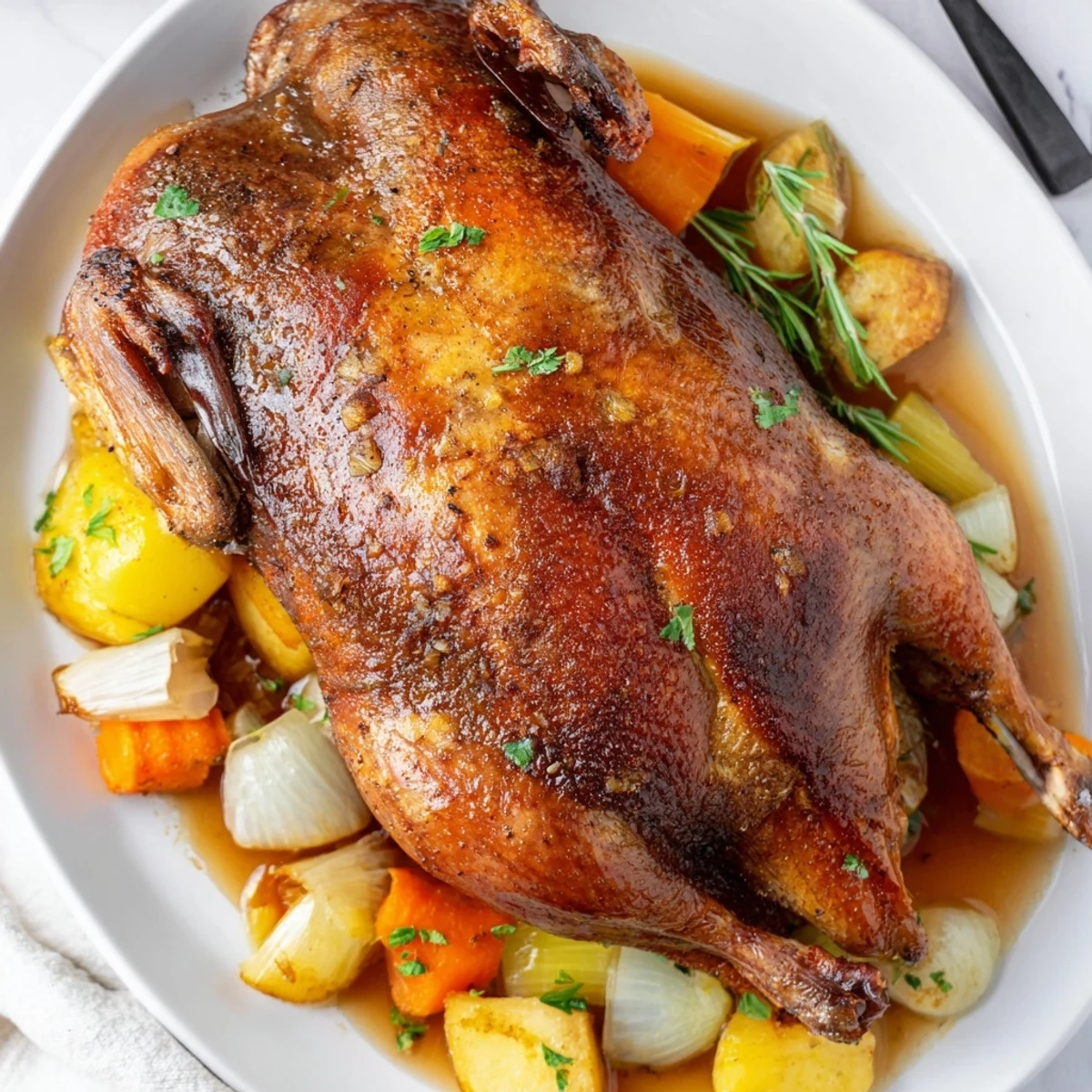
 This French-style braise starts by seasoning and searing a whole duck to render fat and develop a crisp skin. Root vegetables—carrots, parsnips, leeks, onion and garlic—are sautéed in the remaining fat, deglazed with dry white wine, then simmered with stock and herbs. The duck braises covered until tender, then finishes uncovered at high heat to re-crisp the skin before resting and carving.
The sizzle of duck fat hitting a hot pot is one of those sounds that makes everyone in the house wander into the kitchen asking what is for dinner. My neighbor Jacques once knocked on my door holding a bottle of wine because he smelled the aromatics drifting through our shared hallway on a cold Sunday evening. That night turned into an impromptu dinner party that lasted three hours. This crispy braised duck has been my cold weather showstopper ever since.
I ruined my first duck by rushing the sear and skipping the rest time, ending up with flabby skin and juices running everywhere when I tried to carve it at a dinner for six people.
Ingredients
- 1 whole duck, about 4 to 5 lbs, trimmed: Ask your butcher to trim the excess fat and remove the giblets, which saves you precious prep time and messy handling at home.
- Kosher salt and black pepper: Season generously and do not be shy, because duck needs more salt than you think to penetrate that thick skin properly.
- 4 medium carrots, peeled and chunked: Cut them on a sharp angle so they look beautiful on the plate and cook evenly alongside the parsnips.
- 3 parsnips, peeled and chunked: Their earthy sweetness pairs perfectly with the richness of duck fat and holds up well to long braising.
- 2 leeks, white and light green parts, sliced: Slice them thin and soak in cold water to remove any hidden grit trapped between the layers.
- 1 yellow onion, quartered: Leave the root end intact when quartering so the pieces stay together during the saute.
- 3 celery stalks, cut into 1 inch pieces: They add a subtle savory backbone to the braising liquid without overpowering the other vegetables.
- 6 garlic cloves, smashed: Smashing rather than mincing lets them melt into the sauce gently while still releasing plenty of flavor.
- Olive oil: You only need a couple of tablespoons to get the sear started before the duck renders its own glorious fat.
- 1 cup dry white wine: A Chenin Blanc or Sauvignon Blanc works beautifully here, and whatever is left in the bottle pairs well with dinner.
- 2 cups low sodium chicken stock: Low sodium gives you control over the salt level, which matters since the braising liquid reduces and concentrates.
- Fresh thyme, rosemary, and a bay leaf: These three aromatics transform the braising liquid into something deeply fragrant and complex with almost no effort.
- Fresh parsley, optional: A handful chopped over the finished plate adds a bright pop of color and freshness right at the end.
Instructions
- Preheat and prepare:
- Set your oven to 350 degrees Fahrenheit and pat the duck completely dry with paper towels, then season it all over and inside the cavity with salt and pepper.
- Get that sear going:
- Heat olive oil in a large Dutch oven over medium high heat until it shimmers, then place the duck breast side down and let it cook undisturbed for 5 to 7 minutes until the skin turns a deep golden brown.
- Brown the other side:
- Flip the duck using tongs and sear the opposite side for another 5 minutes, then remove the duck to a plate and pour off all but about 2 tablespoons of the rendered fat.
- Build the vegetable base:
- Add all the carrots, parsnips, leeks, onion, celery, and smashed garlic to the pot and saute for 7 to 8 minutes, letting them pick up some color and begin to soften in that seasoned duck fat.
- Deglaze with wine:
- Pour in the white wine and scrape up every browned bit from the bottom of the pot, letting the wine reduce by half so the sharp alcohol smell cooks off and leaves pure flavor behind.
- Nestle and braise:
- Return the duck to the pot resting on top of the vegetables, pour in the chicken stock, and tuck the thyme, rosemary, and bay leaf around it before covering with a tight lid and transferring to the oven for one and a half hours, basting the duck with the braising liquid halfway through.
- Crisp the finish:
- Remove the lid, turn the oven up to 425 degrees Fahrenheit, and roast uncovered for 20 minutes until the duck skin blisters and turns deeply crispy while the vegetables bubble beneath it.
- Rest and serve:
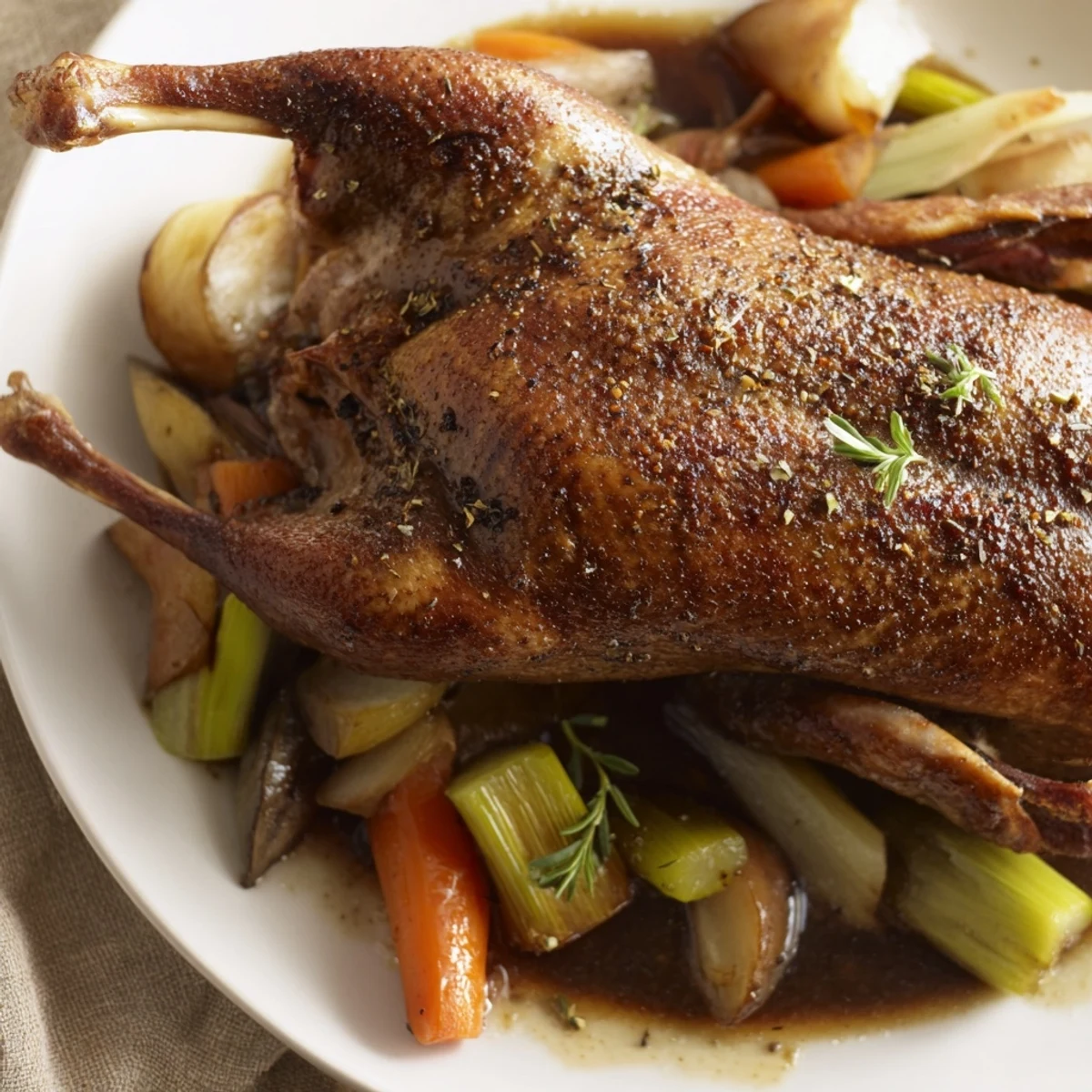
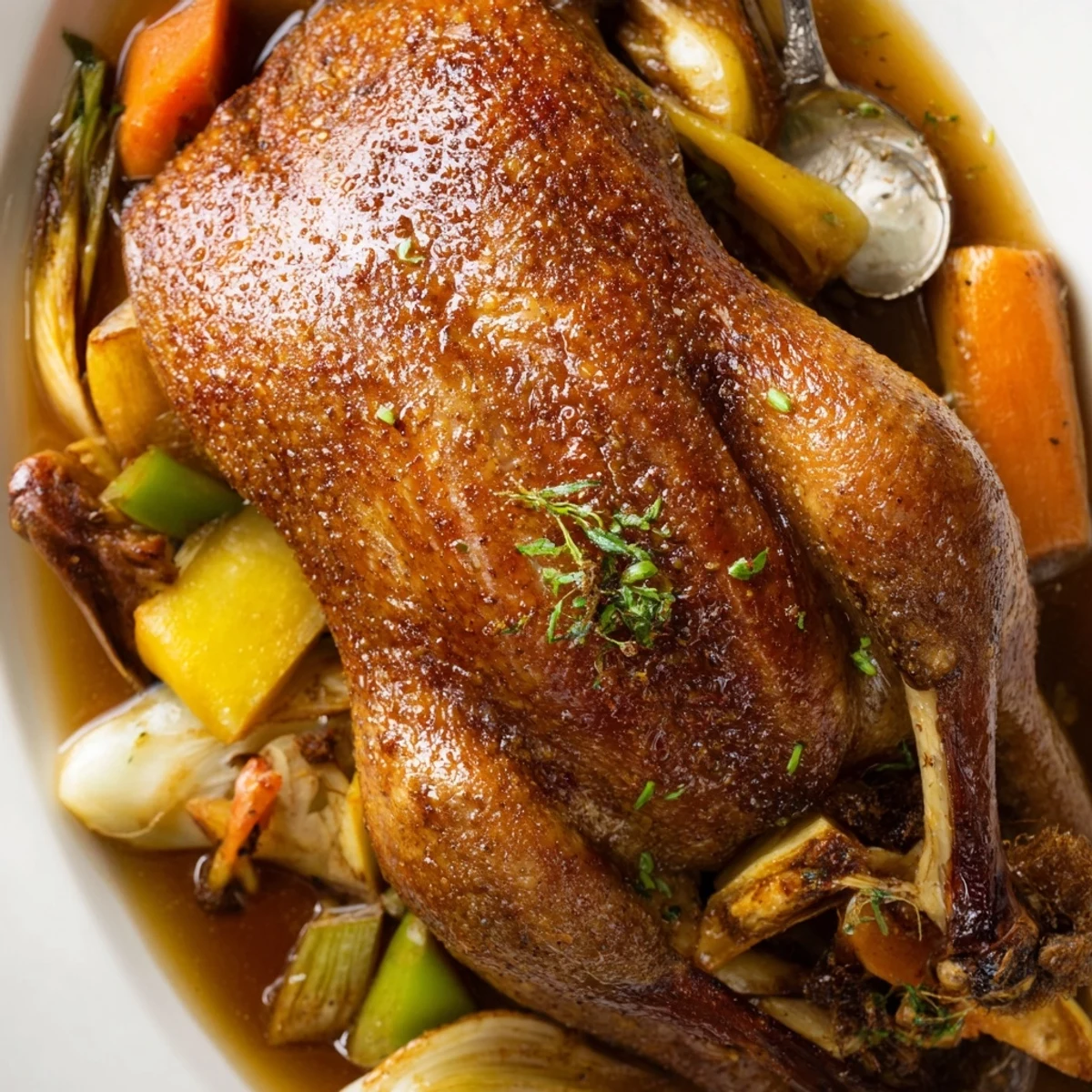
- Take the duck out and let it rest for a full 10 minutes before carving so the juices redistribute, then serve over the braised vegetables with ladles of the cooking juices and a scattering of fresh parsley.
 Save Pin
 That Sunday with Jacques turned into a standing monthly tradition where we take turns cooking something ambitious and unhurried, and the duck has made repeat appearances by popular demand.
Choosing Your Wine for Cooking and Pairing
Reach for a Loire Valley Chenin Blanc when you want bright acidity to cut through the richness, or a light Pinot Noir if you prefer something with a little more warmth and fruit.
Swapping Root Vegetables
Turnips, rutabaga, baby potatoes, or even chunks of butternut squash all work beautifully here, so use whatever looks best at the market that morning.
Essential Tools and Final Thoughts
A heavy Dutch oven is non negotiable for this recipe because it holds heat evenly and transitions seamlessly from stovetop to oven. Keep your tongs handy for flipping the duck without piercing the skin. A sharp knife and a sturdy cutting board make carving much less stressful.
- Save the leftover rendered duck fat in a jar in the refrigerator for roasting potatoes later in the week.
- Always double check your chicken stock labels for hidden gluten if you are cooking for someone with sensitivities.
- Trust the braise and resist the urge to peek under the lid before the halfway mark.
 Save Pin
 Some dishes feed people, and this one brings them to your table and keeps them there long after the plates are empty.
Recipe FAQs
- → How do I get extra-crispy skin?
-
Pat the skin thoroughly dry, score lightly between the breast and thigh, and start by searing breast-side down to render fat. Parboiling briefly can help; finish uncovered at high heat to blister and crisp the skin.
- → Can I use duck pieces instead of a whole bird?
-
Yes. Brown portions skin-side first to render fat, then nestle them into the braise. Reduce braising time—legs will take less time than a whole bird—until the meat is tender and juices run clear.
- → What vegetable substitutions work well?
-
Swap or add other root vegetables such as turnips, potatoes or rutabaga. Keep pieces similar in size so they cook evenly; firmer roots can be cut smaller to match the braise time.
- → Which wines and stocks pair best for the braise?
-
Use a dry white like Chenin Blanc or a light Pinot Noir to deglaze; both add brightness without overpowering. Choose low-sodium chicken stock to control salt and let the herbs shine.
- → How do I know when the duck is done?
-
Look for tender legs that move easily at the joint and meat that pulls away from the bone. For safety, aim for an internal temperature around 165°F in the thickest part, while braising until the meat is tender.
- → What is the best way to store and reheat leftovers?
-
Cool promptly and refrigerate up to three days. Reheat gently in a low oven covered until warmed through, then uncover and crisp the skin under high heat or a broiler. Shredding and pan-frying the meat in a little fat also refreshes texture and flavor.