
 Save Pin
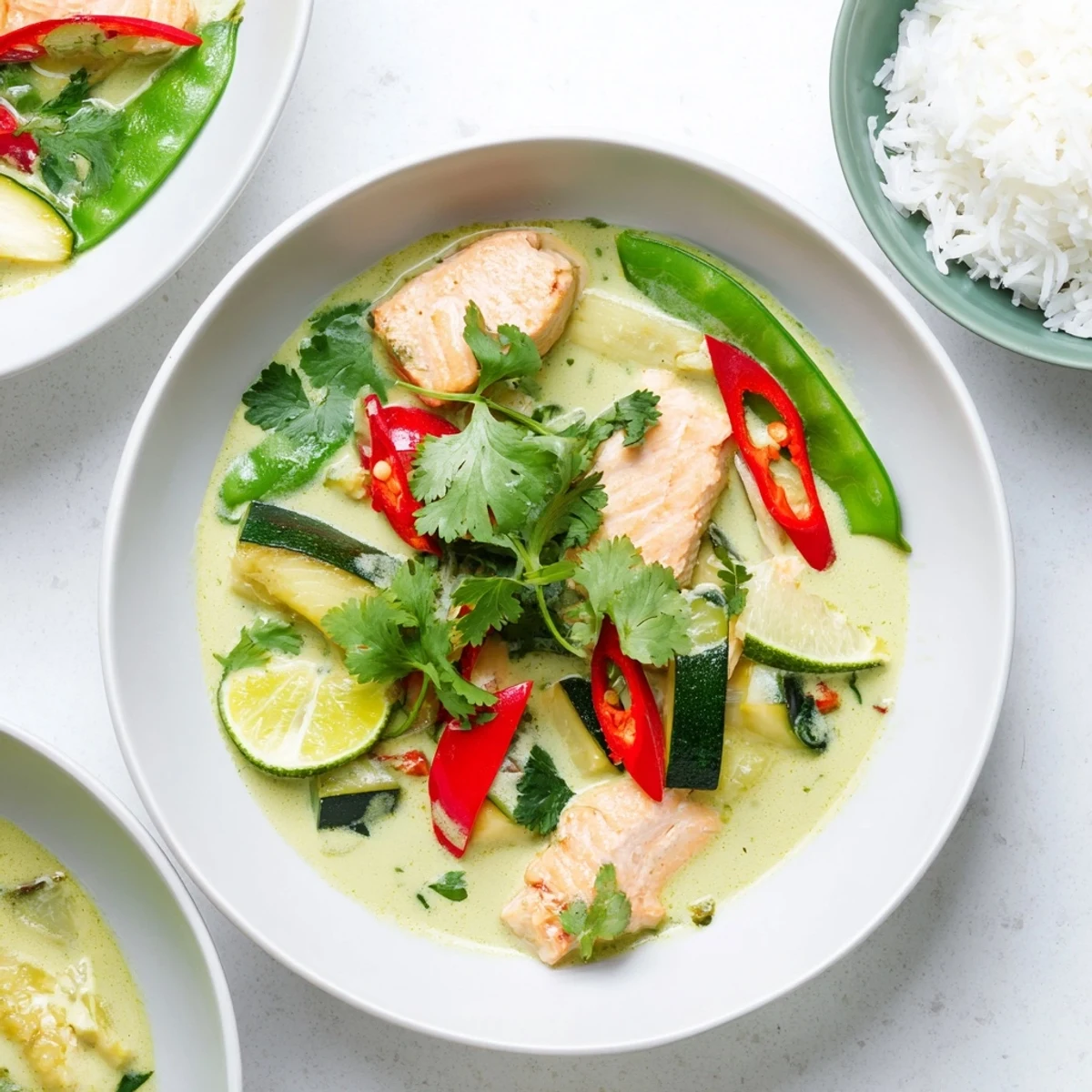
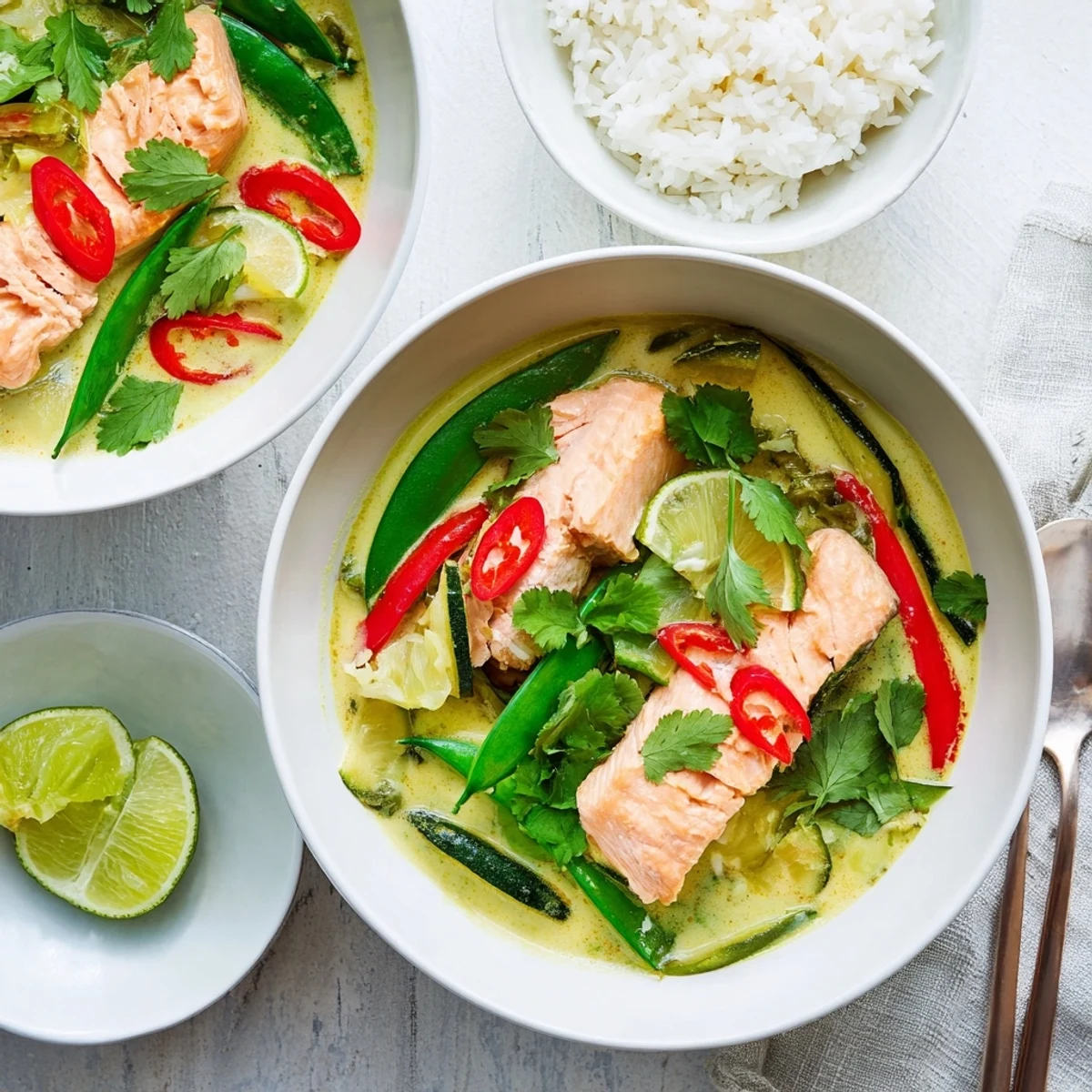
 This vibrant Thai curry combines tender salmon fillets with a rich, aromatic green curry sauce made from coconut milk, Thai green curry paste, and fresh aromatics like garlic, ginger, and lemongrass. The dish features colorful vegetables including zucchini, bell pepper, and sugar snap peas, all simmered together to create a harmonious blend of flavors and textures.
The salmon cooks gently in the fragrant sauce, absorbing the complex spices while remaining moist and flaky. A squeeze of fresh lime juice brightens the rich coconut base, while garnishes of cilantro and sliced chili add fresh contrast. Serve over jasmine rice for a complete, satisfying meal that comes together in just 35 minutes.
The first time I made green curry salmon, my apartment smelled like a street stall in Bangkok for days afterward. My neighbor actually knocked on my door to ask what I was cooking, which is basically the highest compliment you can get in apartment living. I've been making this on repeat ever since, especially when I want something that feels fancy but comes together in under 40 minutes.
I made this for my sister last winter when she was having a particularly rough week at work. She took one bite and literally stopped talking for a full minute, which never happens. Now she texts me every few weeks asking if I can 'do that salmon thing again' and honestly, I'm just happy to have found something that makes her put her phone down.
Ingredients
- Salmon fillets: I use about 150 grams per person and always go for skinless, boneless pieces so they sit beautifully in that sauce
- Zucchini: Sliced into thin rounds it absorbs all those curry flavors without turning mushy
- Red bell pepper: Thinly sliced adds this gorgeous sweetness and pop of color against the green sauce
- Sugar snap peas: Leave them whole for satisfying crunch in every bite
- Onion: Sliced into thin half moons, it melts into the sauce as it cooks
- Thai green curry paste: This is your flavor foundation so don't be shy with it
- Vegetable oil: Just enough to bloom those aromatics without overwhelming the dish
- Garlic and ginger: Fresh is non negotiable here, the jarred stuff just doesn't have the same punch
- Lemongrass: Bruising the stalk releases all those citrusy oils into your curry
- Coconut milk: Full fat is your friend here, it makes the sauce incredibly luxurious
- Fish sauce: Adds that essential umami depth without making it taste fishy
- Brown sugar: Just a teaspoon balances all those bold flavors perfectly
- Fresh lime juice: Squeezed in at the end brightens the whole dish
- Fresh cilantro: Torn by hand over each bowl adds this herbal freshness
- Jasmine rice: The only rice that really belongs under a curry like this
Instructions
- Prep your salmon:
- Pat those fillets completely dry with paper towels and give them a light seasoning of salt, then set them aside while you get everything else ready
- Start your aromatics:
- Heat the oil in a large skillet over medium heat and toss in your sliced onion, letting it soften for about 2 minutes until it's translucent and fragrant
- Bloom the curry paste:
- Stir in your garlic, ginger, and green curry paste, cooking for just 1 minute until the paste darkens slightly and releases this incredible aroma that'll fill your entire kitchen
- Add the vegetables:
- Toss in the zucchini, bell pepper, and sugar snap peas, stir frying them for about 2 minutes so they're still crisp but starting to pick up all those flavors
- Build the sauce:
- Pour in the coconut milk along with fish sauce, brown sugar, and that bruised lemongrass stalk, bringing everything to a gentle simmer
- Cook the salmon:
- Nestle the salmon fillets right into that sauce, cover the pan, and let it cook for 8 to 10 minutes until the salmon flakes easily with a fork
- Finish with lime:
- Pull out the lemongrass stalk, squeeze fresh lime juice over everything, and give it one gentle stir to combine
- Serve it up:
- Spoon that curry and sauce over steaming jasmine rice and top with fresh cilantro, sliced chili if you like heat, and extra lime wedges on the side
 Save Pin
 This curry became my go to for dinner parties after I served it to friends who claimed they hated fish. The salmon just melts into the sauce, and suddenly they're asking for seconds. There's something magical about watching someone discover they actually love something they thought they hated.
Making It Your Own
I've played around with different proteins and tofu actually works beautifully here. It absorbs all that sauce and becomes this little flavor sponge. The key is pressing it well first so it doesn't water down your curry.
Rice That Worthy
Jasmine rice is non negotiable in my house for Thai curries. Its natural floral perfume pairs perfectly with the coconut milk. I always rinse it until the water runs clear and cook it with a pinch of salt and sometimes a knuckle of ginger in the water.
Heat Management
Some curry pastes pack way more heat than others, so I always taste my sauce before adding the salmon. You can always add more paste but you can't take it back.
- Start with less paste and add more if you want more heat
- Coconut milk brands vary in thickness so adjust with a splash of water if needed
- The sauce thickens as it sits, perfect for leftover lunch the next day
 Save Pin
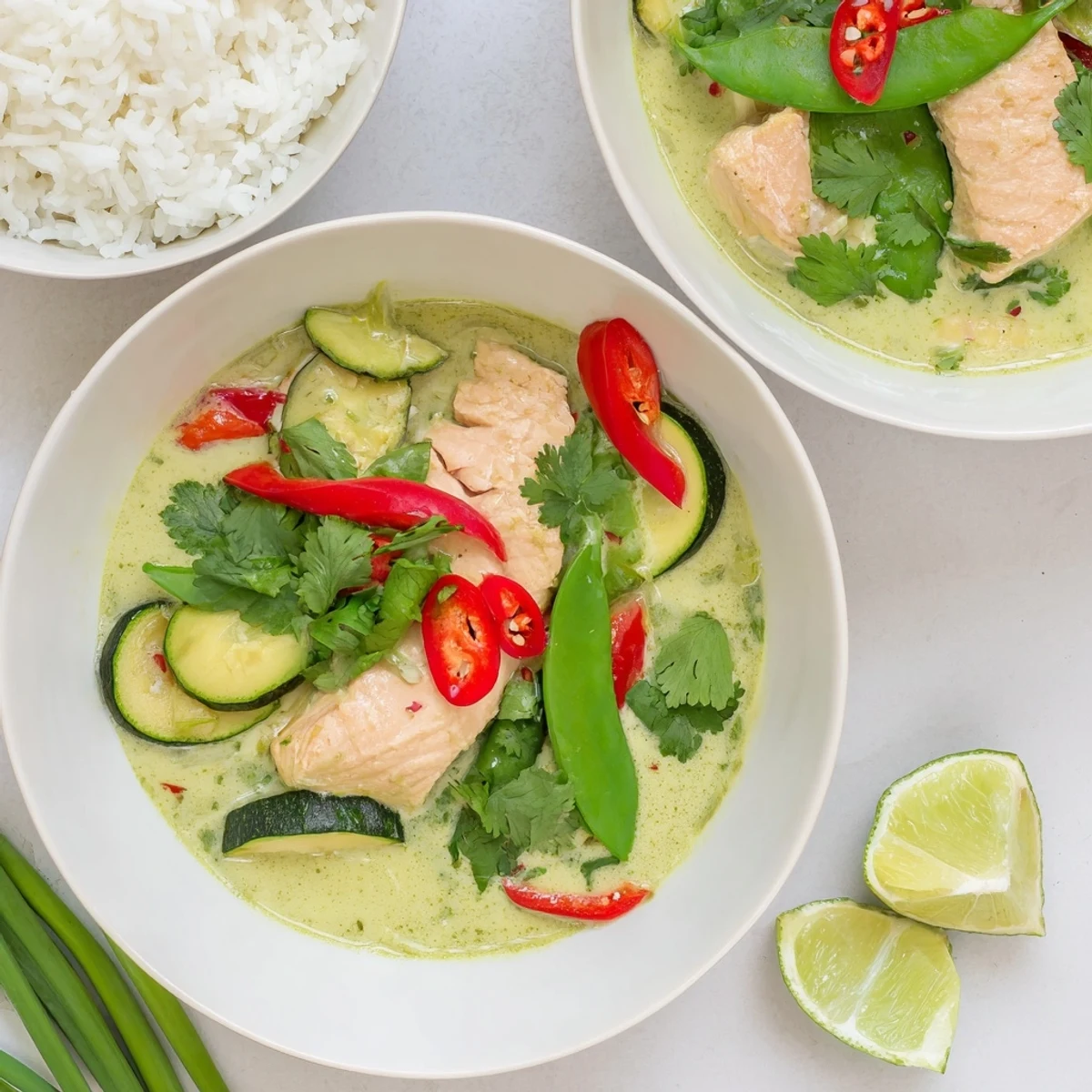
 There's something so comforting about curries, the way they warm you from the inside out and make your entire home smell amazing. This green curry salmon has become one of those recipes I turn to when I need a little hug in a bowl.
Recipe FAQs
- → How spicy is green Thai curry salmon?
-
The spice level depends on your green curry paste. Traditional Thai green curry is moderately spicy, but you can adjust the heat by using less paste or adding more coconut milk to mellow the flavors.
- → Can I use frozen salmon for this curry?
-
Yes, frozen salmon works well. Thaw it completely in the refrigerator before cooking, then pat it dry to remove excess moisture. This helps the salmon cook evenly and absorb the curry flavors properly.
- → What vegetables work best in green curry?
-
Zucchini, bell pepper, and sugar snap peas are excellent choices. Other options include eggplant, green beans, bamboo shoots, or baby corn. Add hearty vegetables earlier and delicate ones later to maintain texture.
- → Can I make this curry dairy-free?
-
This curry is naturally dairy-free as it uses coconut milk instead of cream. Always check your curry paste label to ensure no dairy additives are included, particularly in commercially processed pastes.
- → How do I know when the salmon is done?
-
The salmon is ready when it flakes easily with a fork and the internal temperature reaches 145°F (63°C). The flesh should appear opaque and slightly pink in the center. Avoid overcooking to prevent dryness.
- → Can I substitute the fish sauce?
-
For a vegetarian version, use soy sauce or tamari instead. You can also try mushroom-based soy sauce for a deeper umami flavor that mimics fish sauce's savory profile.