
 Save Pin
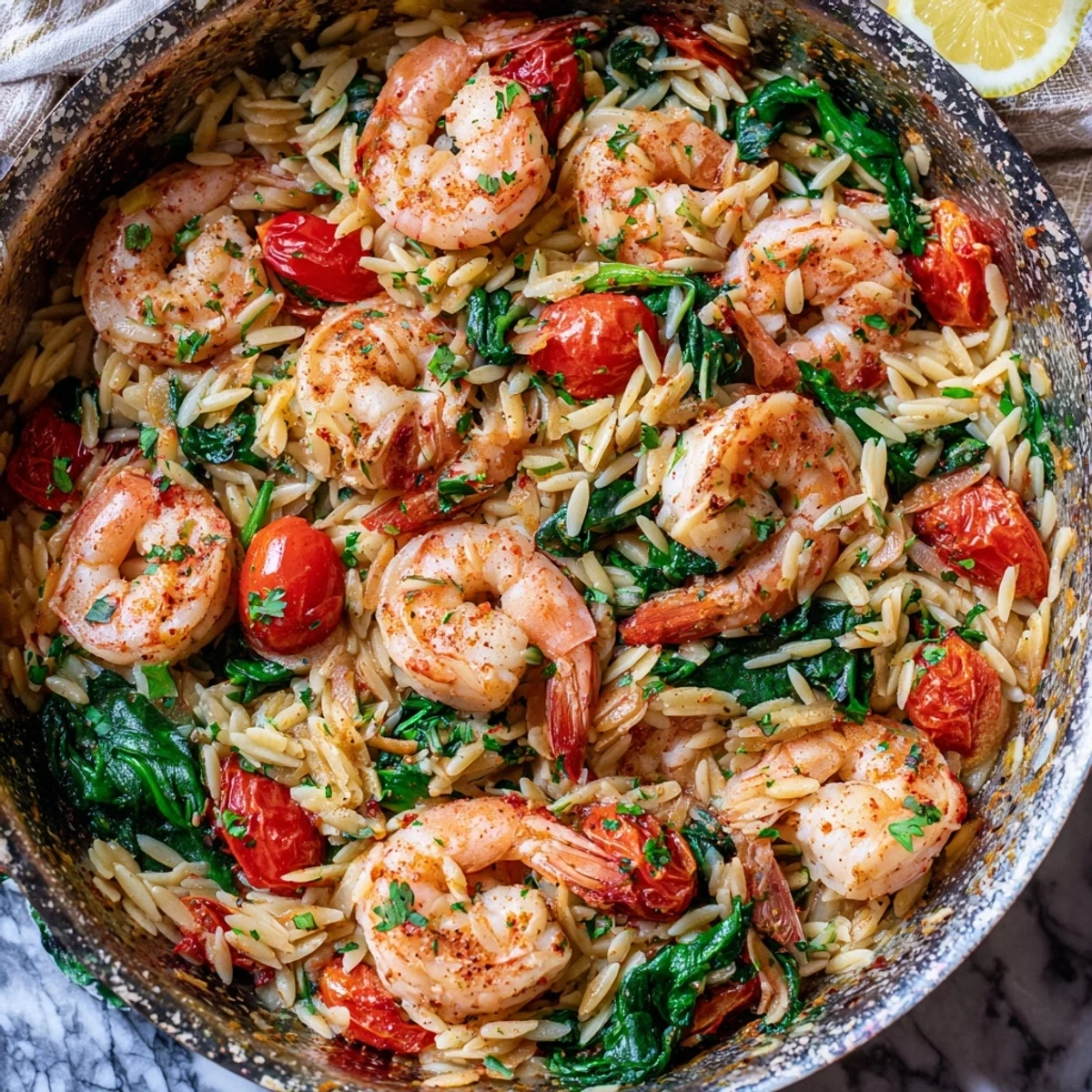
 This vibrant one-pan skillet brings together tender shrimp, perfectly cooked orzo, and bright Mediterranean flavors. The dish comes together in just 30 minutes, starting with seasoned shrimp seared until golden, then removed while the orzo simmers in a flavorful lemon-infused broth. Cherry tomatoes and fresh spinach are added in the final minutes, creating a colorful and nutritious meal that feels both light and satisfying.
The sizzle of shrimp hitting a hot skillet on a Tuesday evening is one of those small sounds that instantly makes a kitchen feel alive. I threw this skillet together one night when the fridge offered nothing but a bag of shrimp, half a lemon, and a box of orzo I had been ignoring for weeks. What landed on the plate tasted like something ordered at a seaside restaurant, not something cobbled together in twenty minutes. It has been on rotation ever since.
My neighbor stopped by unannounced once while I was making this, and the aroma drifting through the open window pulled her right into the kitchen before I even offered a plate. She sat at the counter, fork in hand, and told me it reminded her of a vacation she took to the Amalfi Coast years ago. We polished off the entire skillet between the two of us and I had to make a second batch for my family.
Ingredients
- 1 lb (450 g) large shrimp, peeled and deveined: Buy the best shrimp you can find because they are the star of this dish and frozen works fine if you thaw them completely and pat them very dry.
- 1 medium yellow onion, finely chopped: A sweet yellow onion creates a mellow base that balances the sharpness of the lemon.
- 2 garlic cloves, minced: Fresh garlic only because the jarred stuff cannot compete with the punch you want here.
- 1 cup cherry tomatoes, halved: They burst during cooking and add little pockets of sweetness throughout the skillet.
- 2 cups baby spinach: Stirred in at the end so it wilts gently without turning mushy.
- 1 cup (180 g) orzo pasta: Toasting it briefly in the pan before adding liquid gives it a slightly nutty edge.
- 2.25 cups (540 ml) low-sodium chicken or vegetable broth: The orzo drinks this up and becomes rich and flavorful instead of bland.
- Juice and zest of 1 large lemon: Use every bit of it because the zest carries the perfume and the juice brings the tang.
- 2 tbsp extra-virgin olive oil: Split between cooking the shrimp and sautéing the aromatics.
- 0.5 tsp chili flakes (optional): Just enough warmth to make things interesting without overpowering anyone.
- 0.5 tsp smoked paprika: A light dusting on the shrimp adds depth and a faint campfire whisper.
- Salt and freshly ground black pepper: Season in layers throughout the cooking process.
- 0.25 cup fresh parsley, chopped: Tossed on at the end for color and a clean herbal finish.
- Lemon wedges: Serve alongside so everyone can squeeze extra juice over their own plate.
Instructions
- Sear the Shrimp:
- Heat one tablespoon of olive oil in a large deep skillet over medium-high heat until it shimmers. Pat the shrimp completely dry with paper towels, sprinkle with salt, pepper, and smoked paprika, then cook them for two to three minutes per side until they curl and turn pink but are still slightly translucent in the center. Remove them to a plate immediately so they do not overcook.
- Build the Aromatics:
- In the same skillet, add the remaining tablespoon of olive oil and toss in the chopped onion. Stir for two to three minutes until the pieces turn soft and translucent, then add the minced garlic and chili flakes if you are using them, stirring constantly for about thirty seconds until your kitchen smells incredible.
- Toast the Orzo:
- Pour the dry orzo straight into the pan and stir it around for one to two minutes so every grain gets coated in the seasoned oil. This quick toast gives the pasta a subtle golden flavor that you will notice in every bite.
- Simmer and Absorb:
- Pour in the broth along with the lemon juice and zest, then use your spoon to scrape up any golden bits stuck to the bottom of the pan because that is concentrated flavor. Bring everything to a boil, then lower the heat and let it simmer uncovered for seven to ten minutes, stirring every now and then, until the orzo is tender but still has a slight bite and most of the liquid has been absorbed.
- Wilt the Greens:
- Stir in the halved cherry tomatoes and baby spinach, letting them cook for just one to two minutes until the spinach collapses and the tomatoes soften. The skillet will suddenly look vibrant and colorful.
- Bring It All Together:
- Slide the reserved shrimp back into the skillet and gently fold everything together, cooking for two more minutes just until the shrimp are heated through and coated in the lemony broth. Taste and add more salt or pepper if it needs it.
- Finish and Serve:
- Take the skillet off the heat, scatter the chopped parsley over the top, and set out lemon wedges for squeezing. Serve it straight from the pan because transferring it to a serving dish just means more cleanup.
 Save Pin
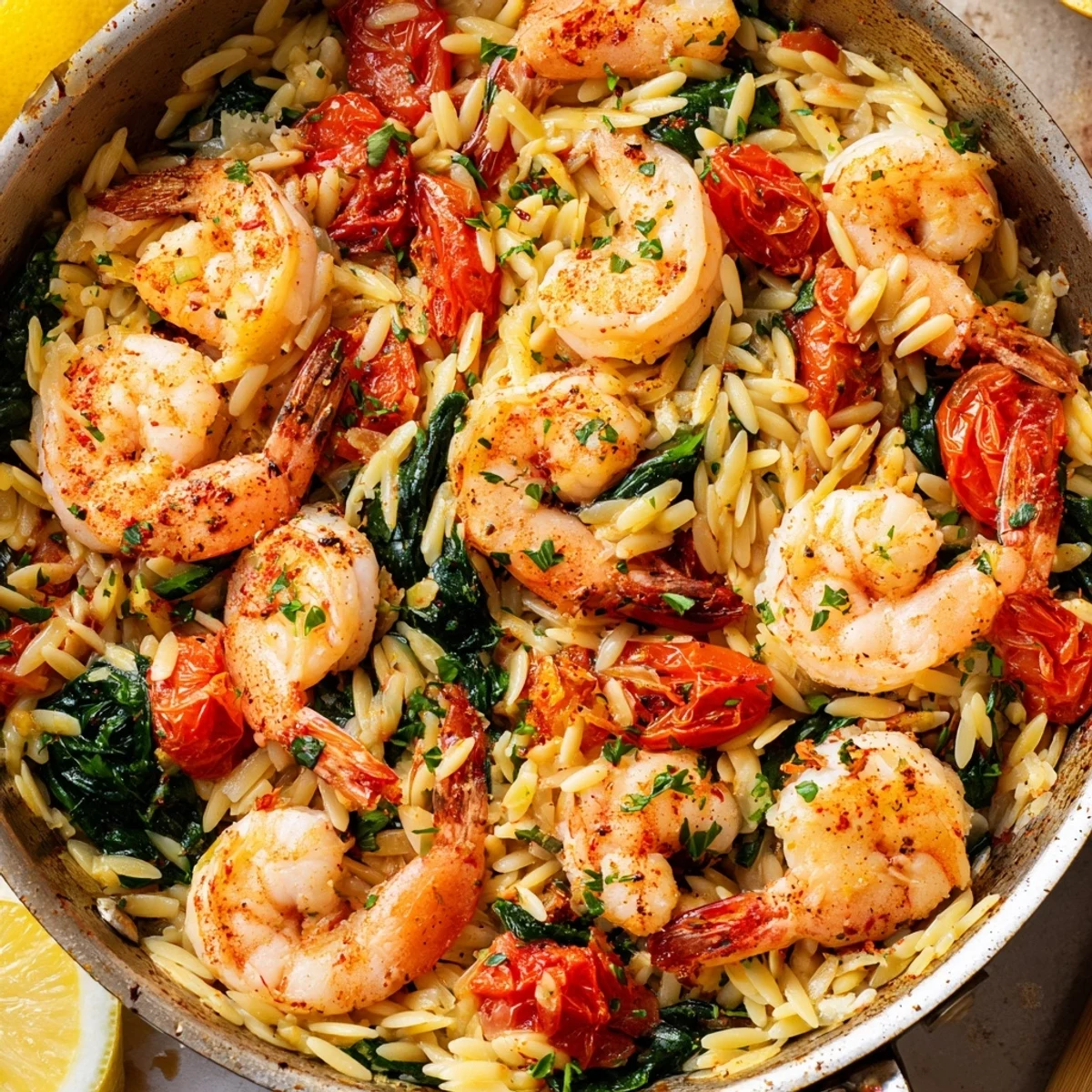
 There is something about carrying a heavy skillet from the stove to the table, steam rising, parsley just scattered on top, that makes everyone gathered around go quiet for a moment. That pause before the first bite is my favorite part of cooking.
Choosing the Right Shrimp
Frozen shrimp from the grocery store is perfectly fine for this recipe as long as you look for ones that are peeled, deveined, and free of any added sodium or preservatives. Thaw them overnight in the refrigerator or under cold running water if you are in a hurry. The size matters more than people realize because large shrimp hold their texture through the quick sear while smaller ones can disappear into the orzo and become almost invisible.
Making It Your Own
This recipe is forgiving by nature and welcomes substitutions based on what you have available. Arugula stands in beautifully for spinach if you want a peppery kick, and a tablespoon of butter swirled in right at the end makes the broth silky and indulgent. I have even tossed in a handful of kalamata olives or crumbled feta on nights when I wanted to push the Mediterranean flavors further.
What to Serve Alongside
This skillet is honestly a complete meal on its own but a piece of crusty bread for soaking up the broth is never a bad idea.
- A chilled glass of Sauvignon Blanc or Pinot Grigio complements the lemon without fighting it.
- A simple side salad with a vinaigrette cuts through the richness if you added butter.
- Remember that this is best eaten immediately because the orzo soaks up broth as it sits and loses that lovely saucy texture.
 Save Pin
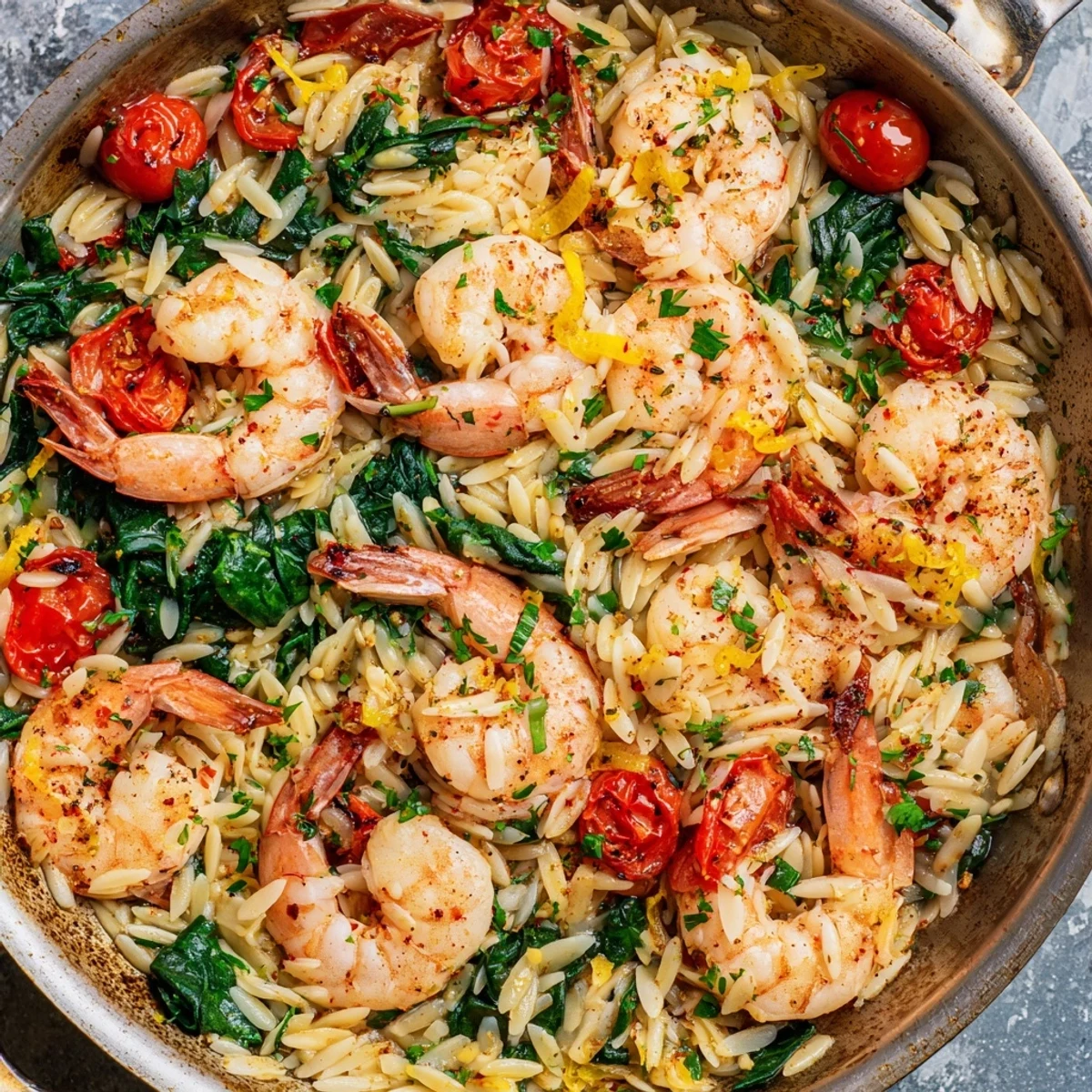
 Keep this recipe in your back pocket for any night when you want dinner to feel like a small celebration without spending more than thirty minutes standing at the stove. The skillet does most of the work, and the lemon does the rest.
Recipe FAQs
- → Can I use whole wheat or gluten-free orzo?
-
Yes, whole wheat orzo adds fiber and nutty flavor, though cooking time may increase slightly. For gluten-free versions, look for rice-based orzo or substitute with small pasta shapes like stelline or acini di pepe.
- → How do I prevent the orzo from becoming mushy?
-
Toast the orzo in oil before adding liquid to enhance texture. Simmer uncovered and stir occasionally to ensure even cooking. Remove from heat when orzo is al dente, as it will continue to soften in the residual heat.
- → Can I make this with frozen shrimp?
-
Thaw frozen shrimp completely and pat dry thoroughly before cooking. Excess moisture prevents proper searing. If pressed for time, cook frozen shrimp directly in the simmering broth for 3-4 minutes instead of searing first.
- → What vegetables work well as substitutions?
-
Artichoke hearts, Kalamata olives, or bell peppers complement the Mediterranean profile. For winter variations, try diced butternut squash or Swiss chard. Add heartier vegetables with the onion, delicate greens like spinach in the final minutes.
- → How long will leftovers keep?
-
Store in an airtight container for up to 2 days. The orzo will absorb more liquid over time, so add a splash of broth or water when reheating. Shrimp may become slightly rubbery, so gentle reheating is recommended.