
 Save Pin
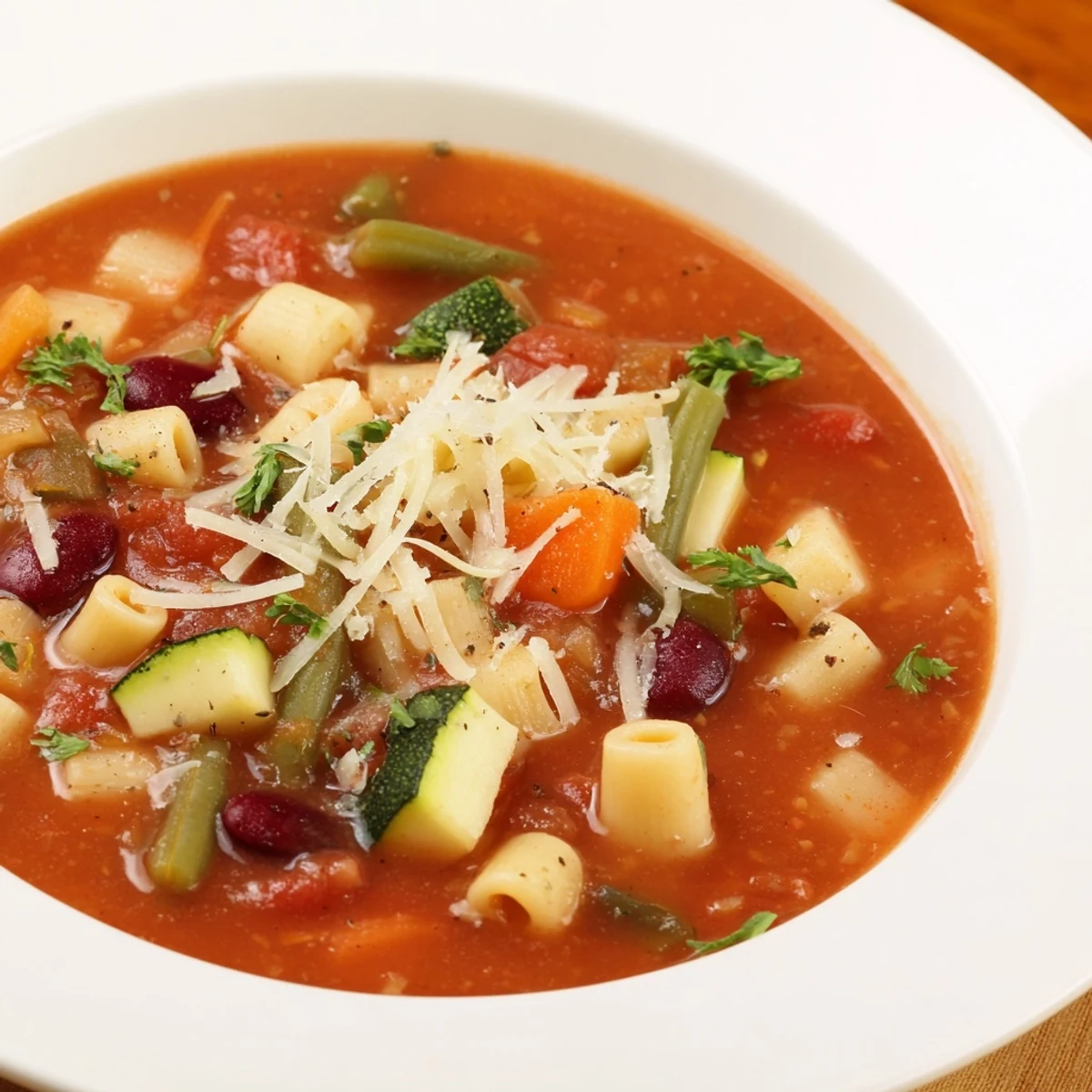
 This hearty Italian minestrone combines sautéed onion, carrot and celery with zucchini, potato and green beans, simmered in a tomato-forward vegetable broth with cannellini and kidney beans. Small pasta is added toward the end so it stays tender. Ready in about an hour for six servings. Finish with parsley and optional Parmesan; swap seasonal greens for variety.
The rain was hammering against the kitchen window so hard that November evening that even the dog refused to go outside, and somehow that sound became permanently linked in my mind with the smell of soffritto hitting hot olive oil.
I made a double batch for a neighborhood potluck once and watched a man who claimed to hate vegetables go back for his third bowl without a shred of irony.
Ingredients
- Olive oil (2 tbsp): A good fruity olive oil carries the entire flavor base, so do not reach for the dusty bottle in the back of the pantry.
- Onion, carrots, celery (1 medium, 2 medium, 2 stalks, all diced): This classic soffritto trio is the soul of the soup and worth dicing small so everything melts together.
- Garlic (2 cloves, minced): Add it after the other vegetables have softened so it never turns bitter.
- Zucchini and potato (1 small each, diced): The potato breaks down slightly to thicken the broth while the zucchini keeps things light and fresh.
- Green beans (1 cup, chopped): They add a satisfying snap and a pop of green that makes the bowl look beautiful.
- Diced tomatoes, 1 can (14 oz): Pour the whole thing in with its juices because that liquid is pure concentrated flavor.
- Vegetable broth (6 cups): Use a broth you actually enjoy sipping on its own because it forms the backbone of every spoonful.
- Cannellini and red kidney beans (1 can each, drained and rinsed): Rinsing removes the cloudy starchy liquid so your soup stays clear and vibrant.
- Small pasta such as ditalini (3/4 cup): Tiny shapes nestle perfectly onto the spoon with the vegetables and beans.
- Dried oregano and basil (1 tsp each): These bloom beautifully when stirred into hot liquid rather than sprinkled on top at the end.
- Bay leaf (1): It works quietly in the background and you will miss it if you forget it.
- Salt and black pepper (to taste): Season gradually and taste as you go because the beans and broth already carry salt.
- Fresh parsley and grated Parmesan (optional): The parsley wakes everything up at the end and the Parmesan adds a salty, nutty finish that feels nonnegotiable to me.
Instructions
- Build the flavor foundation:
- Warm the olive oil in a large heavy pot over medium heat and add the onion, carrots, and celery, stirring until they soften and smell sweet, about five minutes.
- Invite the rest of the vegetables:
- Stir in the garlic, zucchini, and potato, letting them coat in the oil and cook for another three minutes until the garlic is fragrant.
- Add the green beans and tomatoes:
- Pour in the diced tomatoes with all their juices and drop in the chopped green beans, giving everything a good stir so the flavors start mingling.
- Build the soup:
- Pour in the vegetable broth, add both cans of rinsed beans, and stir in the oregano, basil, bay leaf, salt, and pepper, then bring it all to a gentle boil.
- Let it simmer:
- Reduce the heat so the soup barely bubbles and let it go for fifteen minutes, which is just enough time to wipe down the counters and maybe pour yourself a glass of wine.
- Cook the pasta right in the pot:
- Tip in the small pasta and cook for about ten more minutes until both the pasta and vegetables are tender, stirring occasionally so nothing sticks to the bottom.
- Finish and serve:
- Fish out the bay leaf, taste the broth and add more salt or pepper if it needs it, then ladle into wide bowls and shower with parsley and Parmesan.
 Save Pin
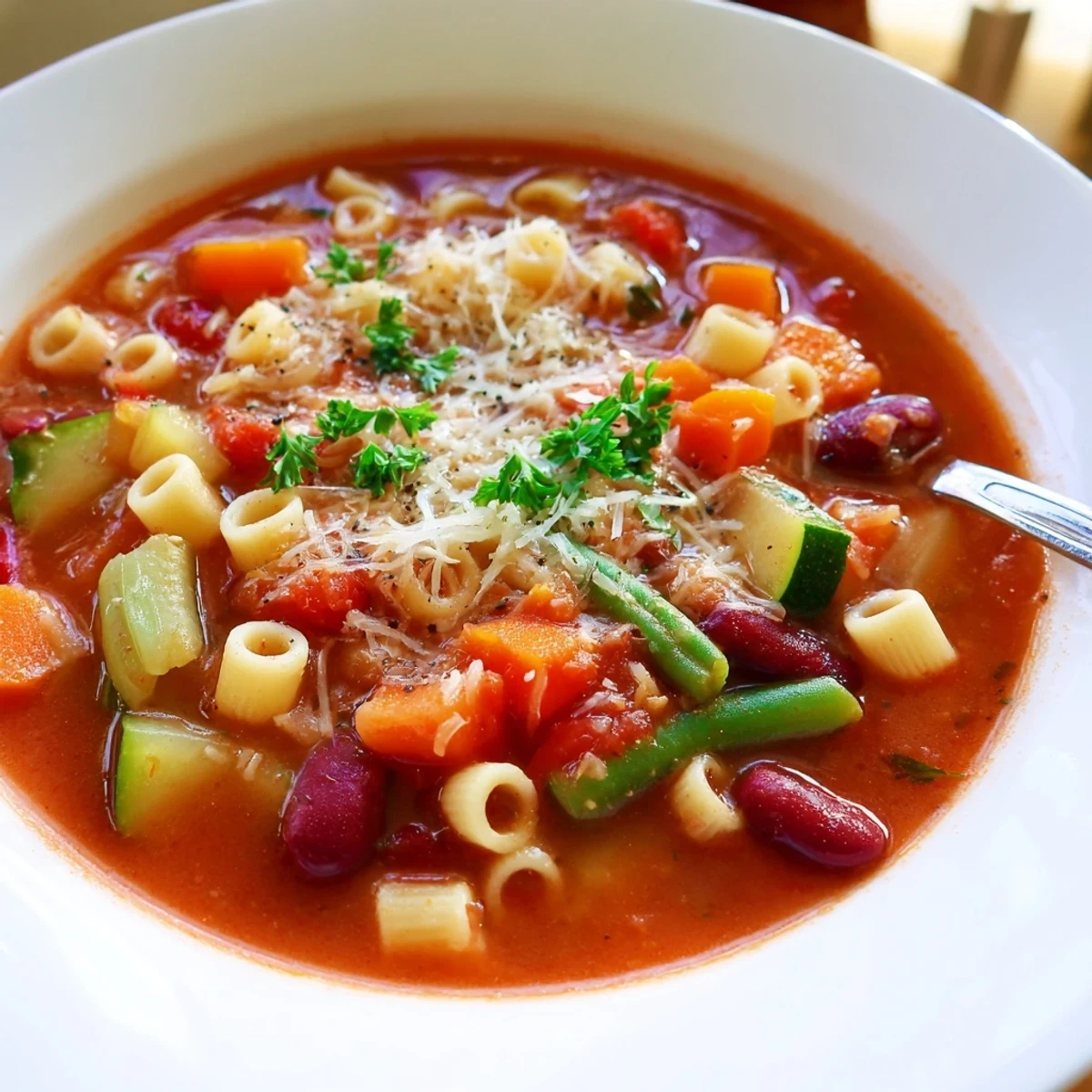
 There is something about a pot of minestrone cooling on the stove that makes a kitchen feel like the warmest room in any house.
Making It Your Own
This soup forgives almost any substitution, which is honestly part of its charm and the reason it has survived for centuries across every region of Italy.
Storing and Reheating
Keep leftovers in an airtight container in the refrigerator for up to four days and know that the second day bowl will taste deeper and more unified than the first.
Serving Suggestions
A thick slice of crusty bread rubbed with garlic and toasted under the broiler turns this soup into a meal that nobody will forget anytime soon.
- A drizzle of your best finishing olive oil over each bowl at the table looks gorgeous and adds a peppery kick.
- A squeeze of lemon juice right before serving brightens every single flavor in the pot.
- Always let the soup rest off the heat for five minutes before ladling because the texture settles into something perfectly spoonable.
 Save Pin
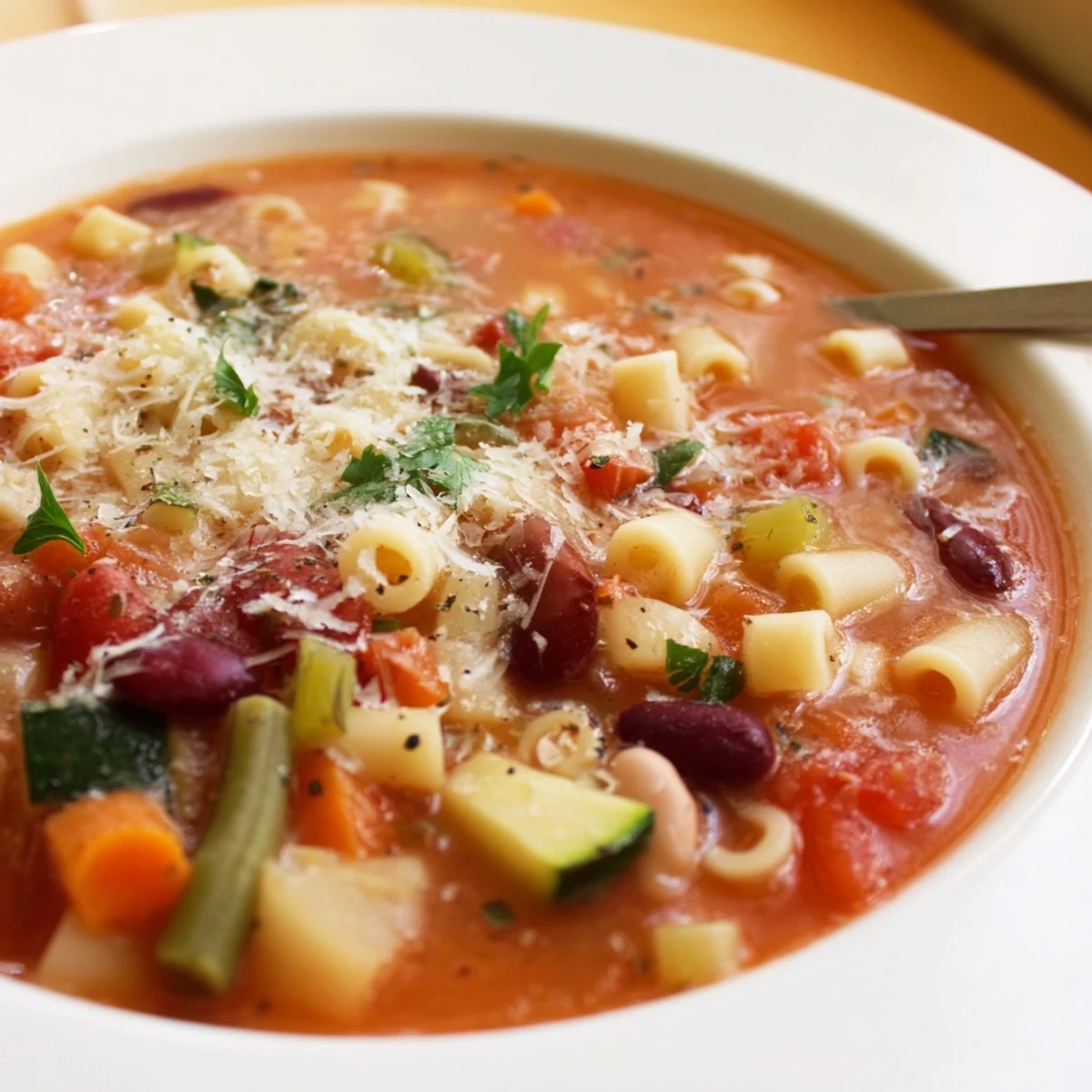
 Some dinners are about showing off and some are simply about showing up with something warm, and this minestrone has always been my favorite way to do the latter.
Recipe FAQs
- → Can I use dried beans instead of canned?
-
Yes. Soak dried beans overnight and simmer until tender before adding to the soup. Alternatively, cook them separately and add at step 4 to maintain texture and control salt.
- → When should I add the pasta?
-
Add small pasta like ditalini or elbow when the vegetables are nearly tender, usually in the last 10 minutes of simmering, so the pasta cooks through without becoming mushy.
- → How can I make this gluten-free?
-
Swap the wheat pasta for a gluten-free small pasta or use cooked rice or quinoa. Check all canned ingredients and broth labels to ensure they are certified gluten-free.
- → What thickens the broth if I prefer a heartier texture?
-
Mash a cup of the cooked beans or a few potatoes in the pot and stir back in to naturally thicken the broth. Simmer a few extra minutes to meld the flavors.
- → How long will leftovers keep?
-
Store cooled soup in an airtight container in the fridge for 3–4 days. Note that pasta absorbs liquid over time; keep extra broth separate if you plan to reheat later.
- → What fresh herbs or variations work well?
-
Fresh parsley or basil brightens the finished dish. Swap in seasonal vegetables like spinach, kale, or cabbage near the end of cooking for added color and nutrition.