
 Save Pin
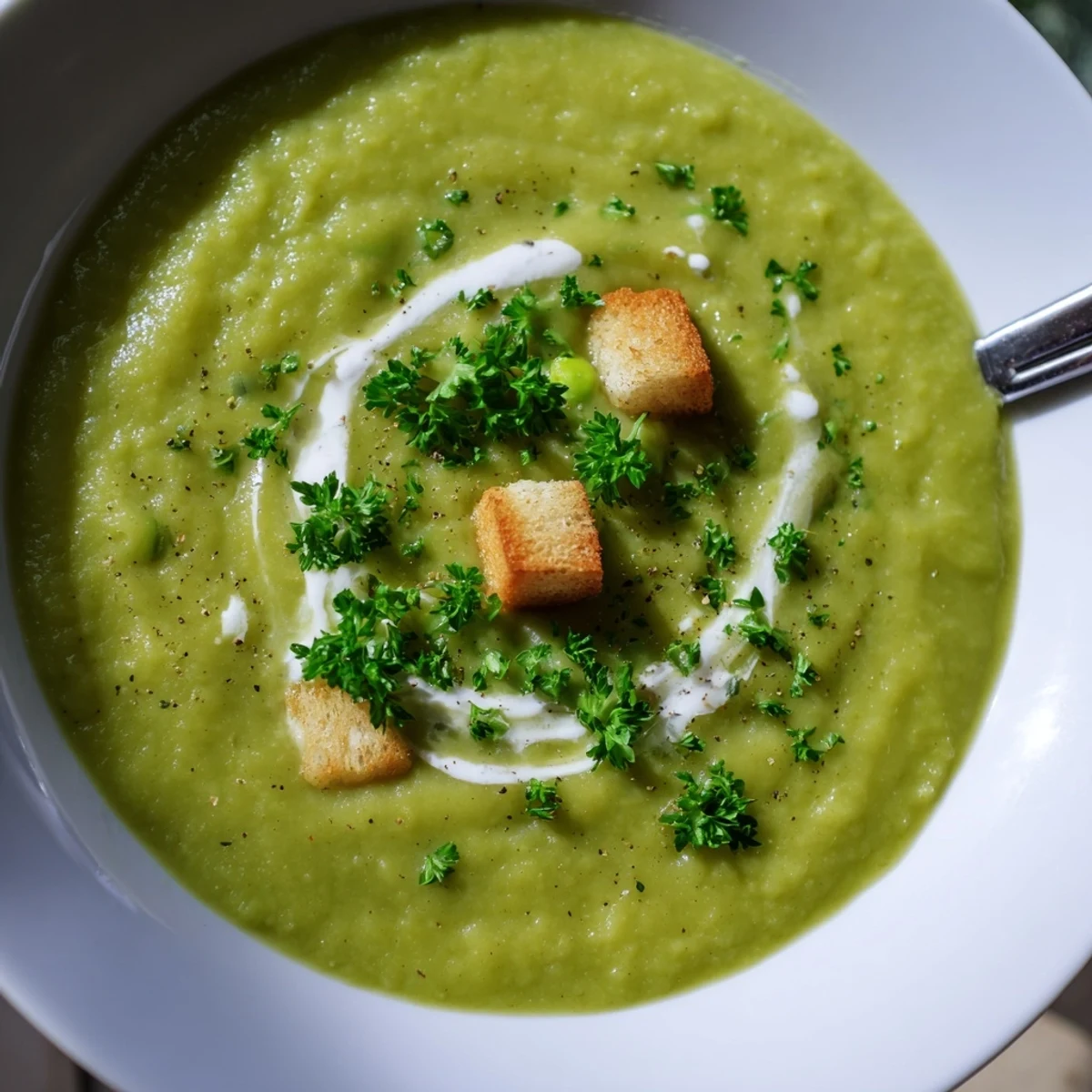
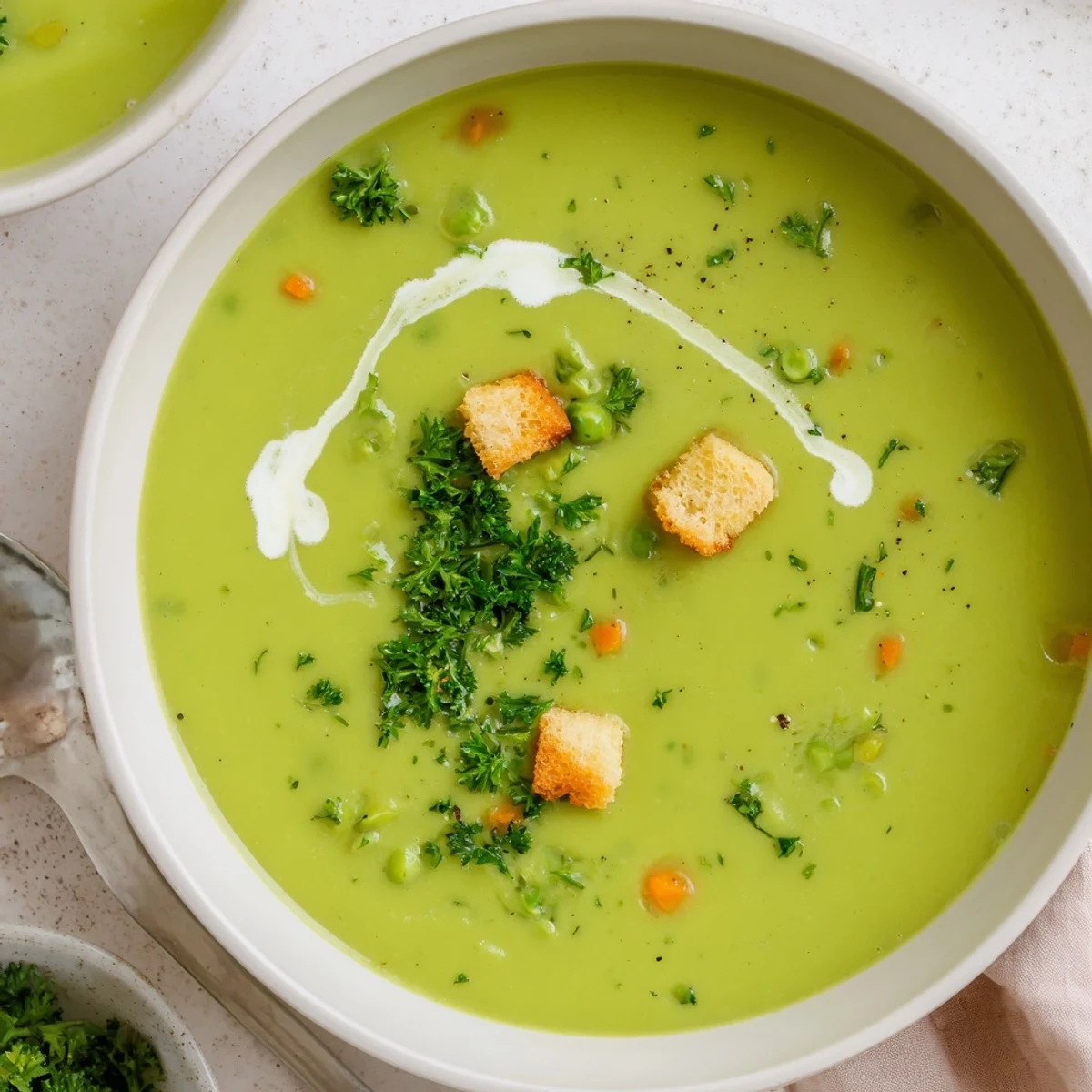
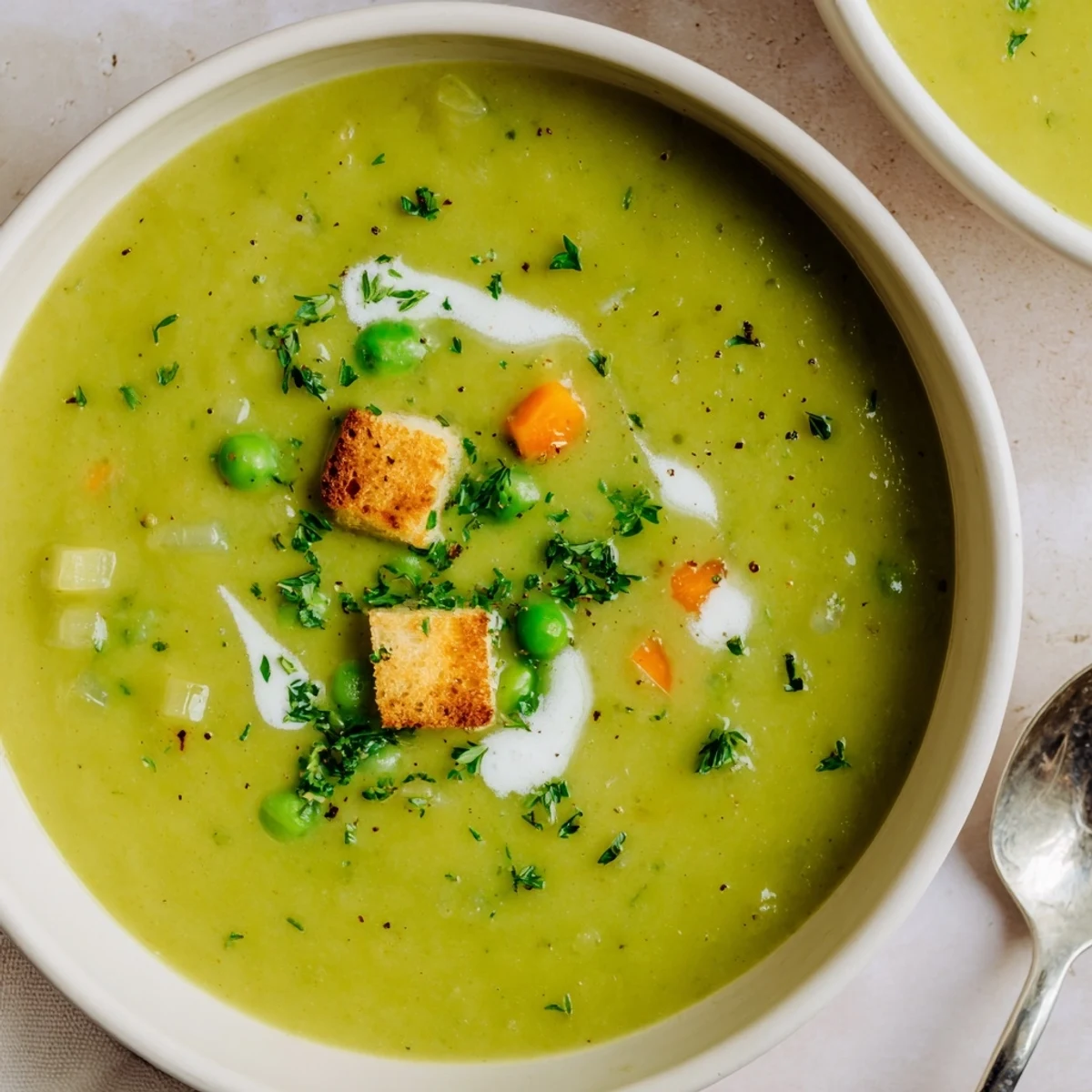
 This hearty pea soup begins by softening onion, garlic, carrots and celery in olive oil, then adds peas, broth and thyme to simmer until tender. Puree until silky, stir in chopped parsley and adjust seasoning. Serve with a swirl of creme fraiche or yogurt and crisp croutons or crusty bread for a satisfying meal.
The rain was hammering against the kitchen window so hard that Tuesday evening that even the dog refused to go outside, and somehow that became the excuse I needed to finally crack open the bag of frozen peas that had been living in my freezer since March. What started as a reluctant dinner turned into one of those meals where everyone goes quiet after the first spoonful, which is honestly the highest compliment in my house. The color alone, that almost absurd vivid green, made the whole kitchen feel alive despite the gloom outside. I have made this soup easily thirty times since then, and it has never once disappointed me.
My neighbor Clara stopped by unannounced one Saturday with a loaf of sourdough she had just pulled from her oven, and I had this soup on the stove within twenty minutes. We sat at the kitchen counter dipping torn chunks of bread into our bowls and talked for three hours about everything and nothing. She now texts me every couple of weeks asking if I have any peas in the freezer, which I always do.
Ingredients
- Olive oil: Just a tablespoon is all you need to wake up the aromatics and give the soup a gentle, rounded backbone.
- Onion: One medium onion, finely chopped, melts into the base and provides a sweet foundation that you will notice if you skip it.
- Garlic: Two cloves minced, added after the onion so it does not burn and turn bitter on you.
- Carrots: Two medium ones, diced small so they cook evenly and add a subtle sweetness that balances the peas beautifully.
- Celery: One stalk, diced, quietly doing important background work that you should never underestimate.
- Green peas: 500 grams, frozen or fresh, and honestly frozen works so well here that you should never feel guilty about using it.
- Vegetable broth: One liter of good quality broth makes all the difference, so taste yours before you pour it in.
- Dried thyme: One teaspoon brings an earthy warmth that pairs with peas in a way that feels almost magical.
- Fresh parsley: Two tablespoons chopped and stirred in at the end, plus extra for making the bowls look cheerful.
- Salt and black pepper: Season to taste at the very end because the broth already contributes salt and you do not want to overdo it.
- Crème fraîche or yogurt: Optional but a small dollop on top turns a simple bowl into something restaurant worthy.
- Croutons or crusty bread: For dipping, crumbling, and generally making the meal more satisfying.
Instructions
- Wake up the aromatics:
- Heat the olive oil in a large pot over medium heat and add the chopped onion, stirring until it turns soft and translucent, about three minutes. You will know you are on the right track when the kitchen starts smelling warm and inviting.
- Build the flavor base:
- Stir in the garlic, carrots, and celery, then sauté for about five minutes until the vegetables begin to soften and their colors deepen slightly. Take your time here because this step is doing more heavy lifting than you might expect.
- Let it simmer:
- Add the peas, vegetable broth, and dried thyme, bring everything to a gentle boil, then reduce the heat and let it simmer for twenty minutes until the peas are completely tender. The broth will take on a gorgeous pale green hue that tells you it is ready.
- Blend until silky:
- Use an immersion blender directly in the pot to purée the soup until perfectly smooth, or work in careful batches with a standard blender. Either way, keep blending a little longer than you think you need to because that extra smoothness is what makes this soup special.
- Finish and season:
- Return the puréed soup to the pot if you used a blender, then stir in the chopped parsley and season with salt and pepper to your liking. Taste it before you serve because a small pinch of salt at this stage can pull everything together.
- Serve with love:
- Ladle the hot soup into bowls and add a swirl of crème fraîche and a scattering of extra parsley if you are feeling generous. Serve with plenty of crusty bread or croutons alongside.
 Save Pin
 I once packed a thermos of this soup for a cold evening walk along the river with my partner, and we ended up sitting on a bench passing it back and forth, watching the fog roll in. It was one of those tiny, unremarkable moments that somehow becomes a core memory. Food does that sometimes.
What to Watch For While It Cooks
The biggest mistake I made early on was rushing the initial sauté and ending up with a soup that tasted flat no matter how much salt I added later. Those first eight minutes with the onion, garlic, carrots, and celery are where the depth of flavor is built, and you cannot cheat that step. Once the peas and broth go in, the hard work is mostly done and you just need patience while it simmers.
Playing With Flavors
A pinch of smoked paprika stirred in at the end changes the entire personality of this soup into something deeply comforting and slightly surprising. Fresh mint is another direction entirely, bright and springlike, and I recommend trying it at least once when you want the soup to feel lighter. Neither addition is required but both taught me that a simple recipe is also a flexible one.
Making It Your Own
This soup freezes brilliantly for up to three months, and I always make a double batch for exactly that reason, because having it ready to thaw on a tired evening feels like a gift to your future self. If you are serving it to guests, a drizzle of good olive oil and a few cracks of pepper on top makes it look like you fussed more than you did.
- Let the soup cool completely before freezing to prevent ice crystals from forming and ruining that smooth texture you worked hard to achieve.
- A squeeze of lemon juice at the end brightens everything and is a trick I learned from a chef friend who swears by it for any green soup.
- Always taste and adjust the seasoning one final time after reheating because cold mutes flavors and you want it to sing when served.
 Save Pin
 Some recipes earn their place in your rotation through grand occasions and celebrations, but this one earned mine through quiet weeknights when nothing else sounded right. Keep frozen peas in your freezer and you are never more than forty minutes away from something warm, green, and deeply satisfying.
Recipe FAQs
- → How do I get a silky-smooth texture?
-
Blend thoroughly with an immersion blender or in batches in a standard blender. For an extra-silky finish, pass the purée through a fine sieve and return to the pot to reheat gently.
- → Can I use frozen peas instead of fresh?
-
Yes. Frozen peas maintain bright color and flavor—add them from frozen and simmer until fully heated. They often produce a sweeter, more consistent result than older fresh peas.
- → How should I adjust seasoning and brightness?
-
Season with salt and freshly ground pepper to taste. A squeeze of lemon juice or a small splash of vinegar at the end brightens the flavors without overpowering the peas.
- → What garnishes work best?
-
Try a dollop of creme fraiche or plain yogurt, chopped parsley, a drizzle of olive oil, smoked paprika or fresh mint. Serve with croutons or crusty bread for texture contrast.
- → How can I make this dairy-free or vegan?
-
Omit the creme fraiche and use a plant-based yogurt or a swirl of olive oil for richness. Confirm any bread or croutons are dairy-free if serving on the side.
- → Can I make this ahead or freeze it?
-
Yes. Cool completely and refrigerate up to 3 days or freeze in portions for up to 3 months. Reheat gently and loosen with a splash of broth if it thickens after freezing.