
 Save Pin
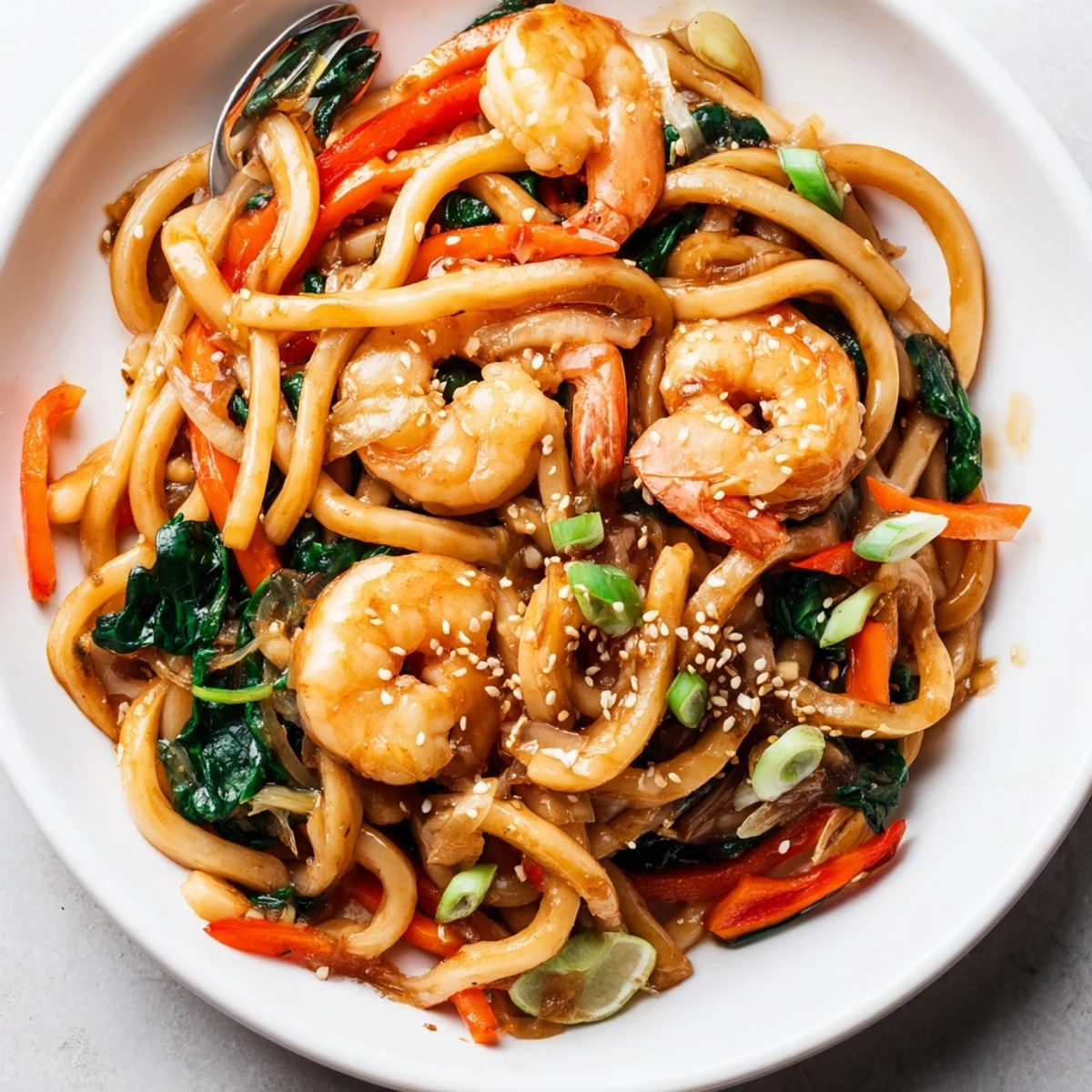
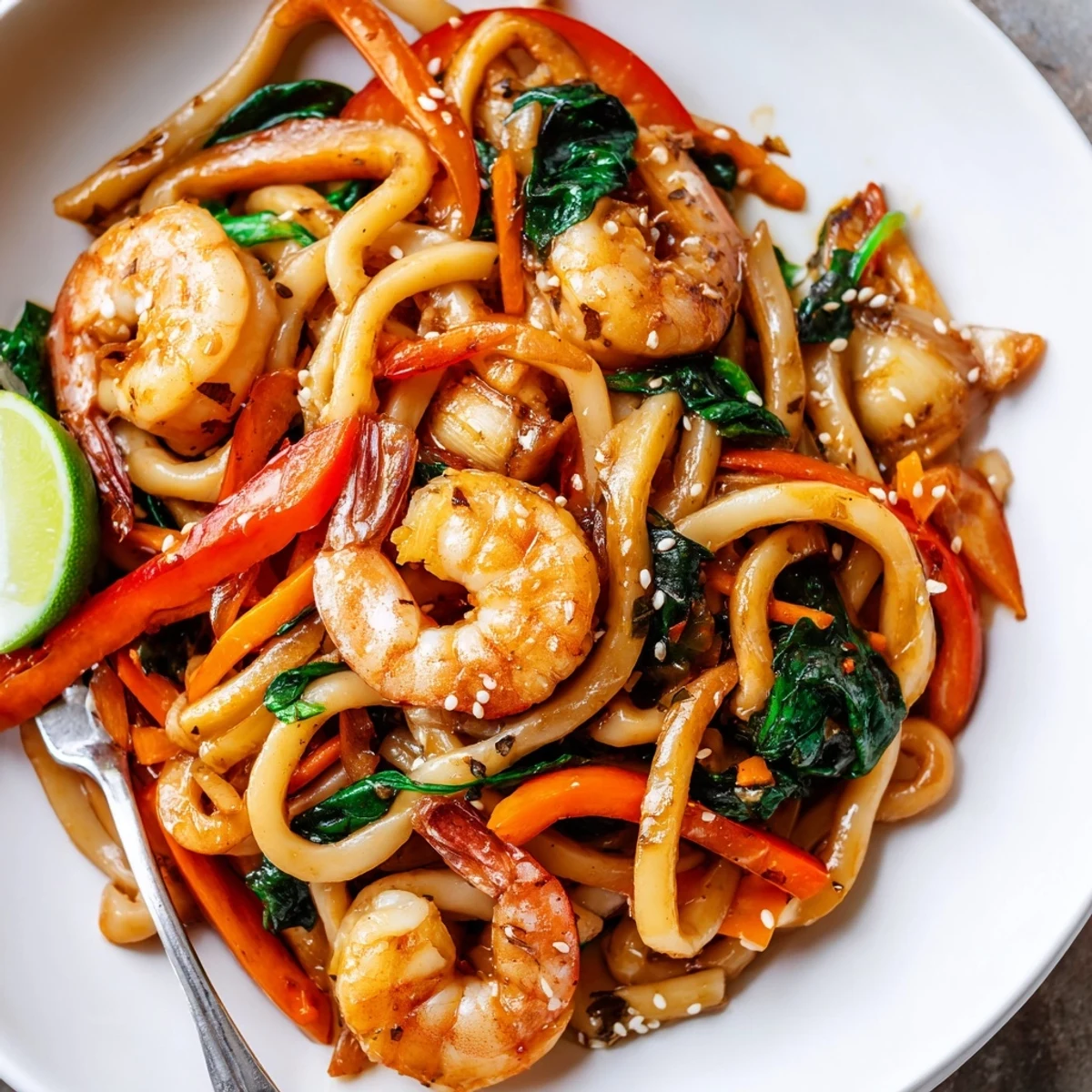
 Plump shrimp and chewy udon marry with julienned carrot, bell pepper and wilted greens in a glossy soy–oyster–mirin sauce. Whisk the sauce, cook noodles, sear shrimp briefly, then stir-fry aromatics and vegetables before tossing everything together over high heat to glaze. Ready in about 30 minutes; swap proteins, add chili for heat, and finish with sesame and nori.
The sizzle of shrimp hitting a smoking wok on a Tuesday evening is one of those sounds that instantly makes a kitchen feel alive. My apartment filled with garlic and ginger steam before I even realized dinner was nearly done. Yaki udon became my weeknight anchor during a phase when takeout menus were winning far too often. Thick, chewy noodles tangled with whatever vegetables were hanging around the crisper drawer felt less like cooking and more like a small act of rebellion against ordering in again.
A friend once stood in my kitchen watching me toss noodles with tongs and declared it looked like a restaurant dish, which might be the nicest lie anyone has told me over a stove.
Ingredients
- 400 g large shrimp, peeled and deveined: Large shrimp hold their texture against the bold sauce and high heat, so do not be tempted to go smaller.
- 400 g fresh or frozen udon noodles: Fresh udon has that irresistible chew, but frozen works beautifully if that is what your store carries.
- 1 small carrot, julienned: Thin strips cook quickly and add a gentle sweetness that balances the savory sauce.
- 1 small onion, thinly sliced: Onion melts into the stir fry and creates a sweet base layer for everything else.
- 1 red bell pepper, thinly sliced: The pepper brings color and a slight crunch that keeps each bite interesting.
- 2 cups baby spinach or bok choy: Greens wilt down in seconds, so add them at the very end to keep them vibrant.
- 2 green onions, sliced: Scatter them on at the finish for a fresh, mild bite that lifts the whole dish.
- 3 tbsp soy sauce: The salty backbone of the sauce, and a low sodium version gives you more control.
- 2 tbsp oyster sauce: This is where the deep, savory umami character comes from, so do not skip it.
- 1 tbsp mirin: A touch of sweetness and a hint of acidity that rounds out the heavier sauces.
- 1 tsp sesame oil: Just a teaspoon is enough to give everything a nutty, aromatic finish.
- 2 tsp sugar: Balances the saltiness and helps the sauce caramelize slightly on the noodles.
- 2 cloves garlic, minced: Fresh garlic makes a difference here, so please use the real thing.
- 1 tbsp fresh ginger, grated: Ginger adds warmth and a slight kick that wakes up the whole wok.
- 2 tbsp vegetable oil: Divided between cooking the shrimp and sauteing the vegetables for even browning.
Instructions
- Whisk the sauce together:
- Combine soy sauce, oyster sauce, mirin, sesame oil, and sugar in a small bowl and stir until the sugar dissolves. Set it near the stove because things move quickly once the heat is on.
- Cook the udon noodles:
- Follow the package directions for your noodles, whether fresh or frozen, then drain well. A little excess water on the noodles will dilute your sauce, so give them a good shake in the colander.
- Sear the shrimp:
- Heat one tablespoon of oil in a large wok or skillet over medium high heat and cook the shrimp for two to three minutes until they turn pink and opaque. Pull them off the heat and set aside so they do not overcook.
- Bloom the aromatics:
- Add the remaining oil to the same pan and toss in the garlic and ginger, stirring for about thirty seconds until your kitchen smells incredible. Keep them moving so nothing burns.
- Stir fry the vegetables:
- Add the onion, carrot, and bell pepper to the pan and cook for three to four minutes, tossing frequently, until they are just tender but still have some snap. You want texture, not mush.
- Bring it all together:
- Toss the drained noodles and shrimp back into the wok, pour the sauce over everything, and stir with tongs until every strand is coated and glossy. This is where the dish transforms from separate parts into something unified.
- Finish with greens:
- Add the spinach or bok choy and sliced green onions, stir frying for one to two minutes until the greens just wilt. Serve immediately with sesame seeds, shredded nori, and lime wedges if you like.
 Save Pin
 One rainy evening I doubled the batch for a small dinner gathering and watched four people go quiet around the table, chopsticks midair, completely absorbed in their bowls.
Making It Your Own
This recipe is endlessly flexible once you understand the rhythm of the sauce. Swap the shrimp for thinly sliced chicken, cubes of extra firm tofu, or a mix of shiitake and oyster mushrooms and the framework still holds. A dash of chili oil or fresh sliced chili folded in at the end changes the whole personality without much effort.
What to Drink Alongside
A glass of chilled sake or a crisp, dry white wine like a Pinot Grigio cuts through the richness beautifully. Even a cold Japanese lager does the job on nights when wine feels too formal.
Tools That Make It Easier
A well seasoned wok or a large flat skillet gives you the surface area and heat distribution this dish needs to shine. Beyond that, keep tongs or a stiff spatula within reach because the window between perfectly caramelized and slightly burnt is surprisingly narrow.
- A wok is ideal but a twelve inch skillet works almost as well.
- Have all your ingredients prepped and arranged near the stove before you turn on the heat.
- Serve immediately because yaki udon waits for no one.
 Save Pin
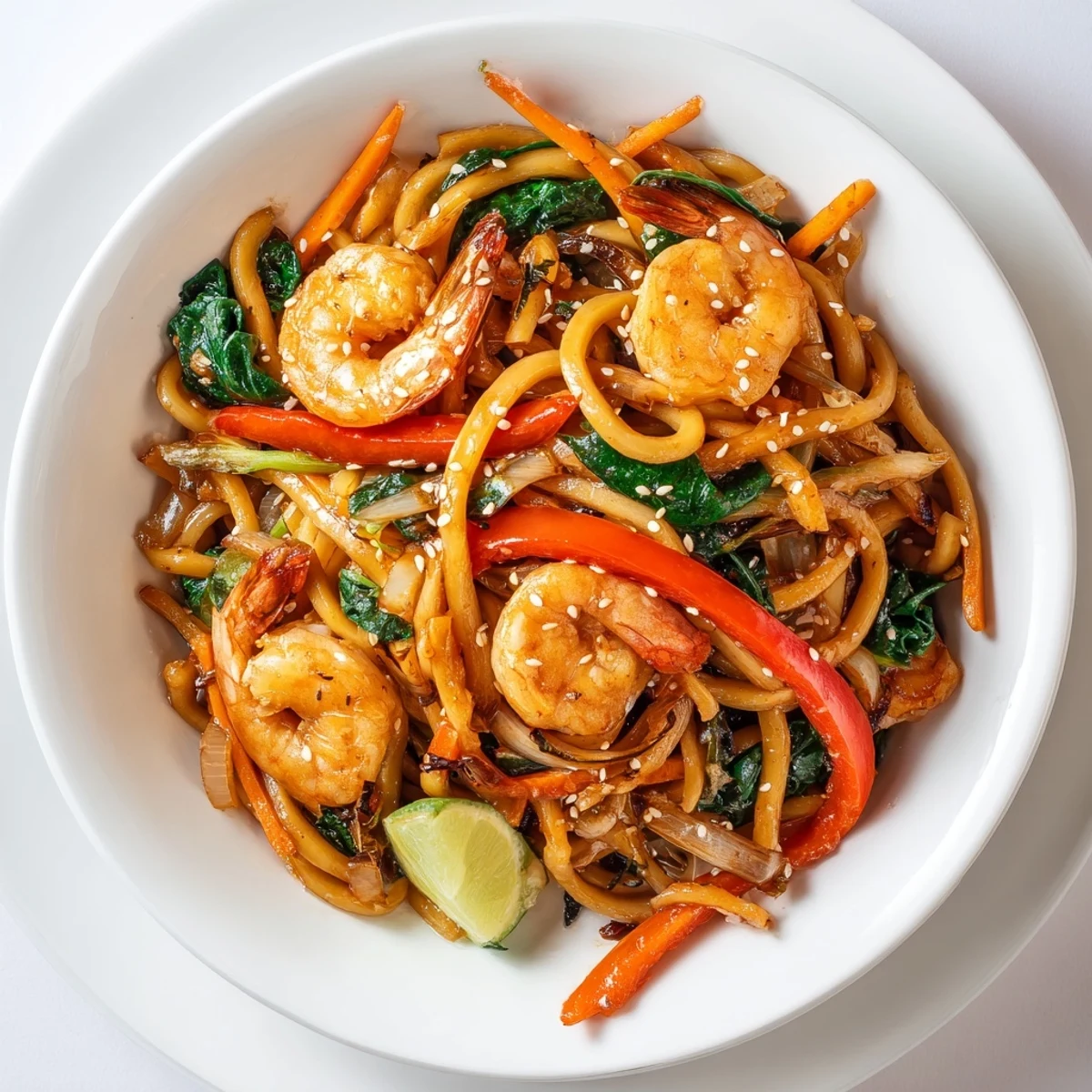
 Some dishes earn a permanent spot in the rotation not because they are fancy but because they show up reliably when you need them. This yaki udon is exactly that kind of companion.
Recipe FAQs
- → Can I use frozen udon?
-
Yes — thaw or briefly boil frozen udon according to package instructions, drain well, then add to the pan. Cold or waterlogged noodles will steam instead of searing, so toss quickly over high heat to restore chew.
- → How do I know when the shrimp are cooked?
-
Shrimp are done when they turn opaque and pink with a slight curl; about 2–3 minutes over medium-high heat for large shrimp. Avoid overcooking to keep them tender.
- → How can I make this gluten-free?
-
Use gluten-free udon or rice noodles and substitute tamari for soy sauce and a gluten-free oyster alternative or extra mirin. Check labels on all sauces to ensure they are certified gluten-free.
- → What are good protein swaps?
-
Swap shrimp for thinly sliced chicken, firm tofu, or mushrooms. Adjust searing time: chicken needs longer, tofu benefits from a quick crisping, and mushrooms release extra umami.
- → How do I add more heat?
-
Stir in chili oil, gochujang, sliced fresh chiles, or a pinch of red pepper flakes when adding the sauce. Taste and adjust gradually to keep the savory balance.
- → Can leftovers be reheated?
-
Yes — gently reheat in a skillet over medium heat with a splash of water or oil to loosen noodles. Avoid microwaving too long to prevent the shrimp from becoming rubbery; quick pan tosses retain texture.